
Enterprise Transformation & Innovation
Organisational Development
Reference Content ID: #LEAD-ES60005ALL
Introduction to Organisational Development
Organisational Development (OD) is a structured approach to improving enterprise performance and culture. It aligns strategy, people, processes, and technology to deliver sustainable change.
OD rests on systems thinking, stakeholder engagement, and learning. It uses data-driven diagnosis, co-design, and iterative interventions to shift behaviours and capabilities.
Core components include operating model design, leadership and team effectiveness, process optimisation, and change enablement. Governance and measurement ensure accountability and course correction.
Across on-site, hybrid, and remote teams, OD boosts productivity, strengthens collaboration, supports well-being, and enables digital ways of working. It removes friction, clarifies roles, and equips teams with modern tools.
The result is healthier organisations that execute strategy faster and adapt with confidence. OD provides a repeatable path from insight to impact.
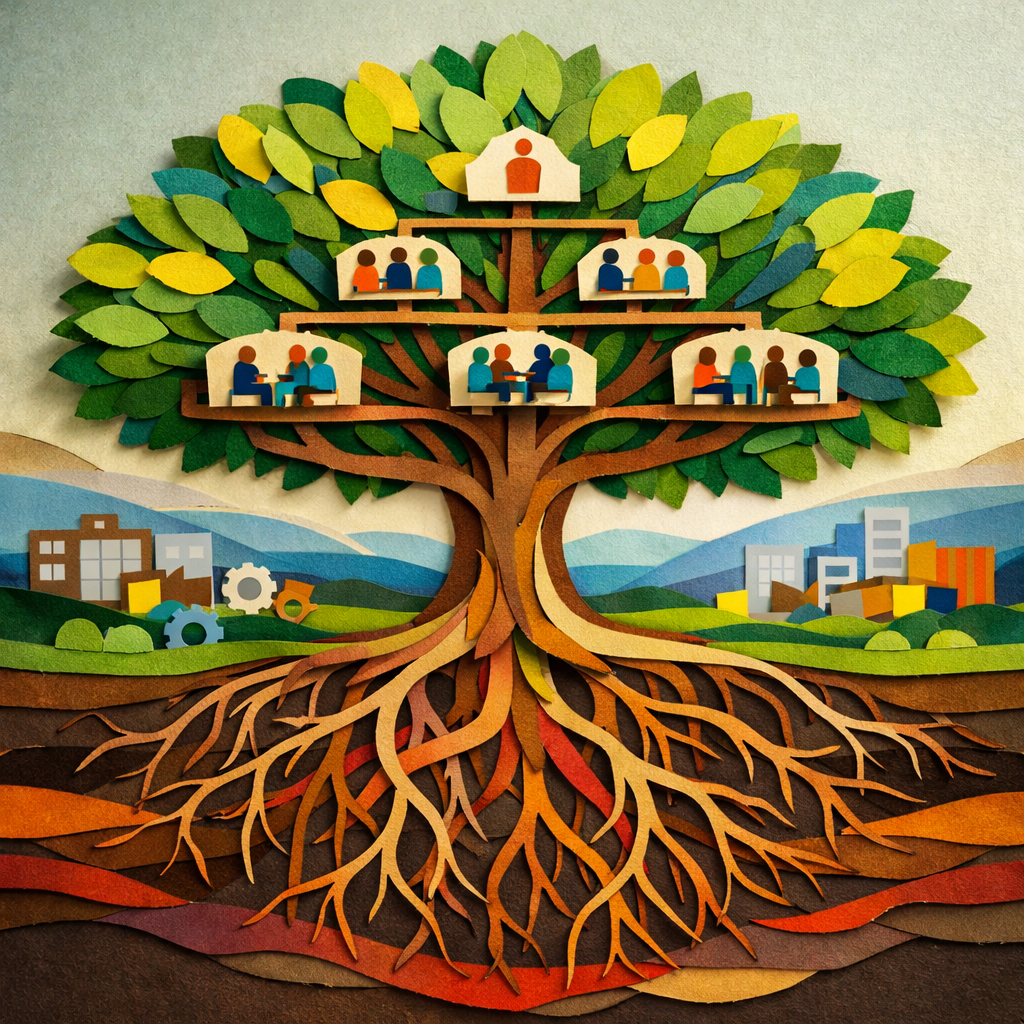
Definition and Scope
Organisational Development (OD) is the disciplined improvement of how an enterprise works. This subsection defines OD, its boundaries, and how its domains interact across contexts.
OD applies behavioural science, systems thinking, and evidence to align strategy, culture, structure, processes, and technology.
- In Scope: Diagnosis, capability building, operating model and process redesign, change and communications, leadership and team development, measurement.
- Out of Scope: Day-to-day HR administration, isolated training without context, one-off technology deployments, and pure compliance exercises.
Primary domains include strategy and operating model, culture and leadership, workforce and skills, process and service design, data and technology enablement, and governance and performance. They interact as a portfolio: strategy informs structure; culture enables adoption; processes are digitised through platforms; analytics guide iteration; governance sustains outcomes across business units.
OD delivers value when these domains are integrated and sequenced to the organisation’s maturity. The scope is deliberate: focus on outcomes, not activities.
Why Organisational Development Matters
Organisational Development (OD) is a strategic lever for execution and resilience. It translates strategy into aligned structures, behaviours, and ways of working.
OD clarifies priorities, converts goals into operating models, and builds capabilities. It reduces execution risk through evidence-based diagnosis, disciplined change, and measurable outcomes.
Amid volatility and rapid technology shifts, OD enables adoption of digital platforms, AI-infused processes, and new collaboration models—without productivity loss or cultural drift.
Stakeholders benefit differently: executives gain control, managers get flow, and employees experience clarity and support.
- Decision Cadence: Shorter planning cycles, clearer accountabilities, and faster cross-functional escalation.
- Process Efficiency: Fewer handoffs, reduced rework, and measurable cycle-time reductions.
- Innovation Throughput: Stable discovery rituals accelerate testing, learning, and scaled deployment.
OD matters because it creates repeatable pathways from intent to impact. Organisations that embed OD adapt faster, execute cleaner, and sustain advantage.
Business Case and Strategic Justification
A robust business case for Organisational Development (OD) ties investment to strategic outcomes. OD converts ambition into executable operating models while lowering delivery risk.
OD aligns strategy, structure, culture, skills, and technology to tackle scaling, cost pressure, regulation, and digital change. It clarifies accountabilities and decision rights, accelerating priority delivery.
ROI stems from productivity gains, fewer failed initiatives, and faster time-to-value. Evidence includes better cycle time, cost-to-serve, quality, digital adoption, customer outcomes, and revenue growth; benefits compound across functions.
Typical benefits include:
- Strategy Execution: Goals become funded, accountable work.
- Productivity: Leaner flow; fewer handoffs and delays.
- Risk: Controlled change and compliant operations.
- Capability: Leaders, teams, and skills for digital.
- Innovation: Faster test-learn-scale, guided by data.
OD delivers durable value and coherence. Next steps: baseline performance, define outcomes, and prioritise OD interventions with governance and benefit tracking.
DON’T REINVENT THE WHEEL!
Get access to our Enterprise Standards to Drive Performance, Minimise Cost and Maximise Value.
How is Organisational Development Used?
Organisational Development (OD) is applied through a pragmatic, repeatable framework. It combines structured delivery with disciplined learning to turn strategic intent into operational results.
The framework integrates three perspectives:
- Process stages define the lifecycle—discover, design, deliver, and embed—so that diagnosis, co-creation, implementation, and benefit realisation are sequenced with governance.
- Common pitfalls highlight what to avoid—unclear ownership, solution bias, fragmented change, and weak measurement—protecting pace and credibility.
- Exemplar practices provide patterns from outperformers—evidence-led decisions, stakeholder co-design, agile change, and continuous capability building—that can be tailored to context.
The upcoming subsections deepen this:
- Key Phases & Process Steps explains the lifecycle.
- Identifying Pitfalls & Challenges shows risk controls.
- Learning from Outperformers distils proven practices.
Together, these perspectives align people, process, and technology. They help organisations deliver OD with clarity, speed, and measurable value.
Key Phases and Process Steps
This ten-step approach structures Organisational Development from intent to impact. It sequences analysis, design, enablement, and adoption to reduce risk and accelerate outcomes.
1. Strategic Intent & Outcomes
Clarify vision, value, constraints, success measures.
2. Diagnostic Assessment
Baseline performance, culture, capabilities, risks, and pain points.
3. Opportunity Prioritisation
Rank initiatives by value, feasibility, and dependencies.
4. Operating Model Design
Define structure, roles, decision rights, and interfaces.
5. Process & Service Design
Streamline flows; embed controls, SLAs, and metrics.
6. Capability & Workforce Planning
Align skills, sourcing, learning, and change capacity.
7. Technology & Data Enablement
Specify platforms, integration, governance, and automation.
8. Delivery Roadmap & Governance
Phase work, secure funding, assign accountabilities, steer.
9. Change, Communications & Adoption
Shape narrative; engage, train, and capture feedback.
10. Benefits Realisation & Iteration
Track outcomes; adapt backlog; institutionalise learning.
Executed as a closed loop, the steps sustain momentum and value. The sequence enables coherent decisions, disciplined delivery, and measurable benefits across contexts.
Identifying Pitfalls and Challenges: Antipatterns and Worst Practices
Avoiding pitfalls is as important as following best practices. The patterns below show how OD efforts stall and how poor execution compounds risk.
5 Antipattern Examples:
5 Worst Practice Examples:
Prevent these patterns by anchoring OD in evidence, accountable sponsorship, and adaptive delivery. Use outcome metrics, integrated change, and governance that resolves trade-offs.
Learning from Outperformers: Best Practices and Leading Practices
Outperformers treat Organisational Development as a management system, not a project. They combine disciplined delivery with adaptive learning.
5 Best Practice Examples:
5 Leading Practice Examples:
Adopt these practices to accelerate execution, reduce risk, and sustain advantage. Tailor them to organisational maturity, context, and regulatory constraints.
Who is Typically Involved with Organisational Development?
Clear role definition is vital to align decisions, reduce delivery risk, and maintain momentum. Knowing who leads, who designs, and who adopts ensures OD translates strategy into measurable results.
Primary roles in Organisational Development include:
- Executive Sponsor: Sets direction, secures funding, removes blockers, and holds leaders to account.
- OD/Program Lead: Orchestrates diagnosis, design, delivery, and benefits with clear governance.
- Business Owner: Defines outcomes, prioritises backlog, and aligns operations across functions.
- People & Culture Partner: Shapes capability, workforce, and change plans tied to behaviours.
- Technology & Data Lead: Enables platforms, integration, analytics, and automation for adoption.
Stakeholder influence and benefits include:
- Executives: Establish priorities and capital allocation; gain visibility, risk control, and faster strategy execution.
- Middle Management: Translate goals into plans; benefit from clearer accountabilities and stable delivery cadence.
- Technical Teams & End Users: Build and adopt solutions; gain simpler workflows, better tools, and support.
Clear accountabilities and decision rights accelerate collaboration, value realisation, and continuous improvement. Codified roles create repeatable performance across sites, business units, and delivery models.
Where is Organisational Development Applied?
Organisational Development (OD) is applied across core and enabling functions to improve performance, resilience, and experience. It aligns structures, skills, processes, and technology to deliver measurable outcomes.
Primary domains where OD is applied include:
- Operations: Streamlines end-to-end flows, reduces waste, and stabilises throughput and quality.
- IT & Digital: Modernises delivery, platforms, and data governance to enable scalable automation.
- Finance: Clarifies decision rights, strengthens cost-to-serve insights, and accelerates planning cycles.
- People & Culture: Builds leadership, skills, and engagement; embeds behaviours that sustain change.
- Customer & Sales/Service: Orchestrates omnichannel journeys, improves resolution, and lifts NPS and conversion.
Illustrative scenarios include:
- Hybrid Work Reset: Reconfigures operating rhythms, role clarity, and digital tools to restore productivity.
- Post-Merger Integration: Harmonises operating models, processes, and culture with staged benefits tracking.
OD’s versatility supports product, service, and regulated environments alike. By tailoring interventions to context and maturity, organisations unlock faster execution, lower risk, and better experiences across business units and delivery models.
When Should You Embrace Organisational Development?
Timing determines impact; prerequisites determine speed. Organisations should embrace Organisational Development (OD) when signals show execution, capability, or operating model change is required.
Key timing signals include:
- Scale-Up or Expansion: Rapid growth demands clarified roles and scalable processes.
- Market or Regulatory Shifts: New rules or customers require re-aligned governance and controls.
- Technology Modernisation (Cloud/AI): Platform change needs redesigned workflows, data, and skills.
- Performance Drift: Rising costs, delays, or quality issues require systemic fixes.
- Restructuring, M&A, or Reorg: Integrations need harmonised models, decisions, and culture.
Essential prerequisites include:
- Executive Sponsorship: Active decisions, funding, and removal of blockers.
- Outcome Clarity & Baseline: Defined KPIs, benefits, and starting metrics.
- Capacity & Resources: Teams, budget, tooling, and protected time.
- Data & Insight: Access to operational, financial, and experience data.
- Change Readiness: Engagement plan, champions, and feedback loops.
Act when multiple signals coincide and momentum is high. With prerequisites in place, OD delivers faster, lower-risk improvements and sustained value.
Most Common Organisational Development Artefacts
Effective Organisational Development relies on clear, reusable artefacts that create shared understanding and speed up delivery. These tools connect strategy to day-to-day operations and make progress measurable.
Core artefacts and tools include:
- Operating Model Blueprint: Defines structure, roles, governance, interfaces, and handoffs to align accountability and flow.
- Enterprise Capability Map: Captures what the organisation must be good at; guides investment, sourcing choices, and skills development.
- Process Architecture & Heatmap: Visualises end-to-end processes, pain points, and controls to prioritise redesign and automation.
- Decision Rights Matrix (RACI/RAPID): Clarifies who decides, who is consulted, and who executes to reduce delay and rework.
- Transformation Roadmap & Benefits Tracker: Phases initiatives, budgets, and milestones; tracks KPIs, adoption, and value realisation.
These artefacts enable consistent design, disciplined change, and transparent governance. Used together, they reduce risk, unlock productivity, and ensure OD efforts deliver tangible outcomes that can be monitored and improved over time.
The Artefacts Table
This table offers a quick reference to five core artefacts used in Organisational Development, explaining what each is and how it is applied to turn strategy into measurable results.
| Artefact | Description | Practical use |
|---|---|---|
| Operating Model Blueprint | A structured view of how the organisation works across structure, roles, governance, and interfaces. | Realigns business units after a reorganisation so decision rights and handoffs are unambiguous. |
| Capability Map | An inventory of enterprise capabilities that shows what the organisation must excel at to deliver strategy. | Guides investment by highlighting which capabilities need funding, outsourcing, or skills uplift. |
| Process Architecture & Heatmap | A catalogue of end-to-end processes with pain points and control gaps visualised for prioritisation. | Targets automation by identifying high-volume bottlenecks where cycle time and error rates are highest. |
| Decision Rights Matrix | A concise assignment of who decides, who is consulted, and who executes across key activities. | Reduces rework by accelerating escalations and clarifying approvals in product and change forums. |
| Transformation Roadmap & Benefits Tracker | A phased plan that sequences initiatives and tracks adoption, KPIs, and value realisation. | Maintains delivery focus by linking milestones to measurable outcomes and course-correcting when needed. |