
Enterprise Transformation & Innovation
Continuous Improvement
Reference Content ID: #LEAD-ES60004ALL
Introduction to Continuous Improvement
Continuous Improvement is a disciplined, data-led approach to elevate performance. It builds learning loops into daily work to cut waste and accelerate outcomes.
It rests on clear purpose, customer value, standardised work, fact-based problem solving, small experiments, and feedback. Teams find root causes, prioritise impact, and lock in gains through repeatable routines.
Core components include mapping and measurement, visual management, cadence reviews, and capability building. Methods such as PDCA, Kaizen, or DMAIC provide structure; telemetry sustains momentum.
Applicable across functions, it scales from teams to portfolios. On-site, hybrid, and remote teams raise productivity, collaboration, well-being, and enable automated, data-driven improvements.
The result is a culture that reliably converts insight into better work. Organisations become faster and more customer-centric as value compounds.
Definition and Scope
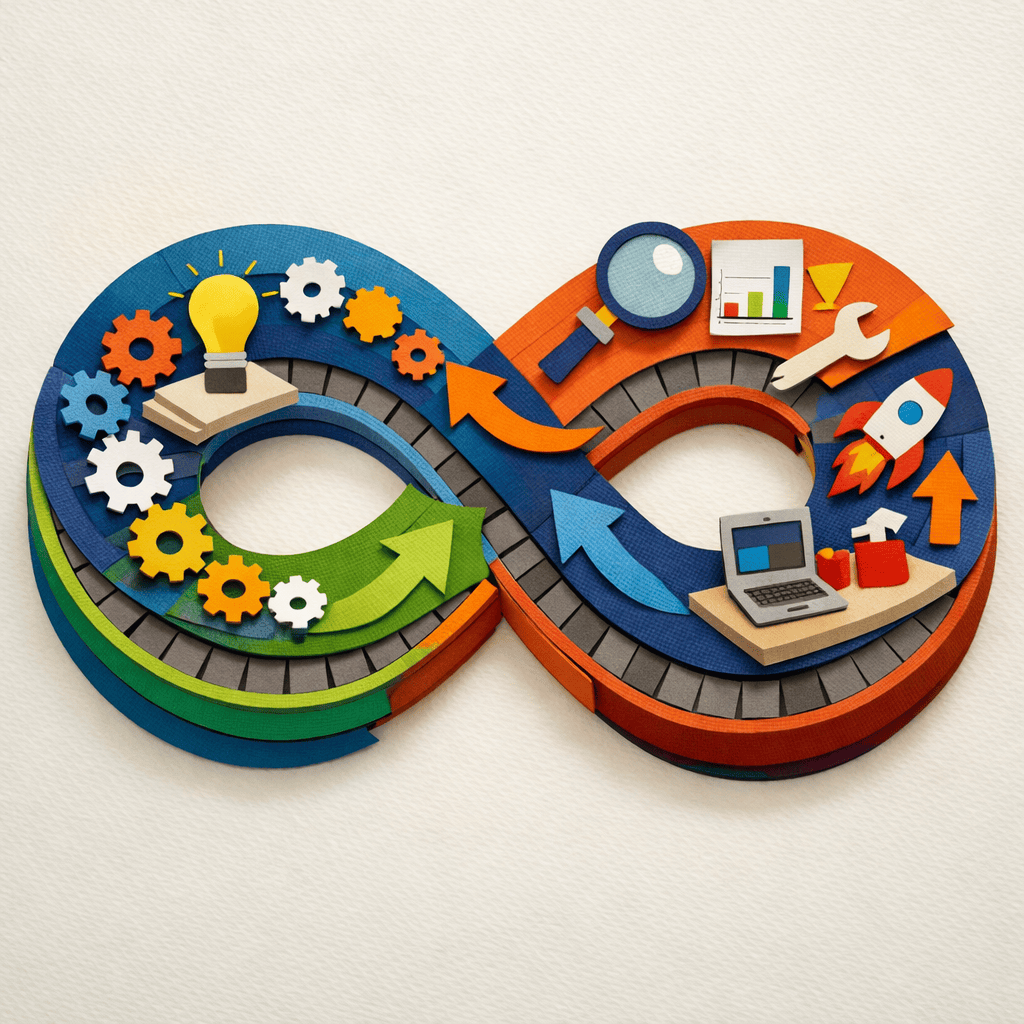
Continuous Improvement (CI) is a systematic, iterative approach to performance and customer value. It embeds learning into daily work, turning data into targeted change.
CI focuses on incremental enhancements to processes, products, and services via small experiments, standardised work, and feedback loops. In scope: cross-functional routines, waste removal, quality and flow; outside: big-bang reorganisations, ungoverned change, and isolated cost cuts.
Primary domains include strategy alignment, process excellence, measurement and telemetry, people capability, governance cadence, and digital enablement. These form a closed loop: align goals, stabilise processes, instrument performance, run experiments, codify gains, and scale across teams and platforms.
Applied well, CI provides a repeatable engine for safer, faster, lower-cost delivery. It clarifies priorities and ensures people and technology improve together.
Why Continuous Improvement Matters
Continuous Improvement matters because it converts strategy into measurable progress and resilience. In volatile markets, it builds the organisational muscle to adapt without disruption.
It hardwires strategic alignment by linking objectives to value streams and funding targeted experiments that close performance gaps and compound ROI.
It accelerates response to market and technology shifts via short learning cycles, real-time telemetry, and automation that rapidly scale proven changes.
It tackles chronic pain—waste, rework, defects, and silo friction—by standardising work, exposing constraints, and steadily elevating capability.
- Executives: Portfolio visibility, evidence-based investment choices, and risk reduction through incremental delivery.
- Managers: Predictable flow, shorter lead times, and clearer accountability for outcomes.
- End Users: Fewer defects, faster service, and greater involvement in shaping solutions.
Adopting Continuous Improvement makes performance improvement routine, not episodic. Organisations gain speed, quality, and engagement while staying aligned to strategic intent.
Business Case and Strategic Justification
A disciplined Continuous Improvement (CI) programme converts strategy into measurable outcomes. This business case outlines strategic fit and ROI.
CI aligns objectives—growth, cost, risk, sustainability, and customer value—by targeting the highest-leverage value streams. It tackles waste, rework, and variability, and captures automation and data opportunities.
Returns come from lower cost-to-serve, faster flow, higher quality, and better asset utilisation. Typical effects: 15–30% productivity uplift and 20–40% lead-time reduction; revenue improves via conversion and retention. Core metrics include throughput, cycle time, right-first-time, and NPS.
Typical benefits and advantages:
- Productivity Uplift: More value per FTE through standardised work and automation.
- Quality & Risk: Fewer defects and incidents; stronger controls and auditability.
- Speed & Agility: Shorter cycle times; quicker response to demand or change.
- Customer Outcomes: Higher satisfaction, retention, and share of wallet.
- People & Culture: Greater engagement, skills, and cross-functional collaboration.
CI provides fast payback and durable capability that compounds across portfolios. Prioritise sponsorship, governance cadence, and a pilot to prove and scale value.
DON’T REINVENT THE WHEEL!
Get access to our Enterprise Standards to Drive Performance, Minimise Cost and Maximise Value.
How is Continuous Improvement Used?
Continuous Improvement is applied through a framework that links strategy to frontline action. This overview introduces how to balance speed with control.
Three perspectives guide execution:
- Process Stages: Define the end-to-end flow and establish evidence gates for each transition.
- Pitfalls: Expose recurring failure patterns to prevent rework, delays, and quality drift.
- Exemplar Practices: Show what good looks like and how to adapt patterns to local context.
Key Phases and Process Steps maps the cycle from framing to stabilising gains, with roles, artefacts, and metrics. Identifying Pitfalls and Challenges surfaces risks like scope creep, tool-first thinking, and brittle change. Learning from Outperformers distils patterns, templates, and automation enablers to speed adoption.
Together, these perspectives make improvement deliberate, safe, and scalable. Teams learn fast while protecting value streams and compliance obligations.
Key Phases and Process Steps
This ten-step approach provides a practical spine for Continuous Improvement. It ensures alignment, evidence-based change, and durable adoption across teams and technologies.
1. Align & Frame
Clarify objectives, scope, value hypothesis, and constraints.
2. Voice of Customer
Capture needs, pain points, and outcome metrics.
3. Map Current State
Visualise flow, roles, systems, handoffs, and wastes.
4. Measure & Baseline
Establish data on time, quality, cost, and risk.
5. Analyse Constraints
Identify root causes, variability, and demand–capacity gaps.
6. Prioritise Opportunities
Rank by impact, effort, risk, and dependencies.
7. Design & Experiment:
Form countermeasures; run small PDCA/DMAIC trials.
8. Implement & Automate
Deploy changes, embed controls, and apply digital enablers.
9. Standardise & Enable
Update SOPs, train roles, and reinforce behaviours.
10. Sustain & Scale
Monitor KPIs, share learnings, and replicate across value streams.
The sequence moves from insight to evidence to institutionalised practice. Following it reduces risk, accelerates benefits, and builds a repeatable improvement engine.
Identifying Pitfalls and Challenges: Antipatterns and Worst Practices
Avoiding common traps preserves ROI and trust. Antipatterns are recurring counterproductive responses; worst practices actively undermine outcomes.
5 Antipattern Examples:
5 Worst Practice Examples:
Steer clear of these to protect flow, quality, and morale. Set clear aims, run small experiments, and standardise to sustain gains.
Learning from Outperformers: Best Practices and Leading Practices
Outperformers treat Continuous Improvement as an operating system. They make improvement visible, routine, and technology-enabled.
5 Best Practice Examples:
5 Leading Practice Examples:
These practices align strategy, execution, and data. They create a self-improving enterprise with faster cycles, higher quality, and engaged teams.
Who is Typically Involved with Continuous Improvement?
Understanding who does what in Continuous Improvement (CI) safeguards speed, quality, and compliance. Clear ownership and decision rights enable rapid learning cycles and durable results.
Primary roles include:
- Executive Sponsor: Sets direction, secures funding, and removes cross-unit blockers; aligns priorities with the CI lead.
- CI Lead/Programme Manager: Orchestrates the portfolio, cadence, and metrics; coordinates sponsors, process owners, and finance.
- Process Owner/Operations Manager: Accountable for end-to-end performance; partners with teams to standardise work and implement change.
- CI coach/Method & Data Specialist: Builds capability in PDCA/Lean/Six Sigma and analytics; pairs with teams to design experiments.
- Product/Technology Owner: Integrates automation, telemetry, and controls; synchronises with security, architecture, and operations.
Influence and benefits:
- Executives & Middle Management: Prioritise value streams and capacity; gain portfolio visibility, risk reduction, and faster ROI.
- Technical Teams: Instrument processes and automate tasks; gain clearer backlogs, less toil, and higher deployment quality.
- End Users: Co-design improvements and validate outcomes; gain better service, fewer defects, and smoother work.
Well-defined roles, supported by a governance cadence, cut friction and accelerate value capture. Collaboration across sponsors, owners, coaches, and teams turns strategy into sustained performance.
Where is Alignment & Unity Applied?
Continuous Improvement spans core and enabling functions, targeting flow, quality, cost, and experience. It scales from single teams to enterprise portfolios and adapts to on-site, hybrid, and remote work.
Domains and functions include:
- Finance: Streamlines close-to-report, reduces manual reconciliations, and improves cost-to-serve and working-capital cycles.
- IT/Digital: Shortens release cycles, increases deployment quality, and embeds telemetry, automation, and DevOps practices.
- Operations & Supply Chain: Eliminates waste, stabilises throughput, and improves OEE, lead times, and fulfilment accuracy.
- Customer Service & Experience: Reduces handling time and repeat contacts while lifting CSAT/NPS through root-cause fixes.
- HR & People: Standardises hiring, onboarding, and learning flows; boosts engagement and safety through feedback loops.
Illustrative scenarios:
- Invoice cycle reduction: Cross-functional team maps bottlenecks, automates validations, and cuts days sales outstanding.
- Incident recovery improvement: SRE team analyses patterns, defines standard work, and halves mean time to restore.
These applications demonstrate CI’s versatility across regulated and dynamic contexts. By standardising work, instrumenting flow, and iterating rapidly, organisations deliver faster, safer, and more reliable outcomes.
When Should You Embrace Continuous Improvement?
Choosing the right moment to launch Continuous Improvement (CI) determines speed to value and adoption quality. CI performs best when triggered by clear business signals and supported by baseline capabilities.
Scenarios and conditions:
- Rapid Growth or Scaling: Protect quality and flow as volume, geography, or product complexity increases.
- Market, Regulatory, or Customer Shifts: Adjust offerings and processes quickly with controlled experiments.
- Technology Refresh or Modernisation: Embed telemetry, standardisation, and automation while changing platforms.
- Persistent Performance Gaps: Tackle chronic defects, delays, or cost leakage with data-led problem solving.
- M&A or Operating-Model Change: Harmonise processes and controls across entities and functions.
Essential prerequisites:
- Stakeholder Alignment: Clear sponsor, objectives, and prioritised value streams.
- Governance Cadence: Defined roles, decision rights, and review rhythm.
- Data Readiness: Baselines, KPIs, and accessible telemetry.
- Capacity & Skills: Allocated time, CI expertise, and coaching support.
- Standard Work Foundation: Documented processes and control points.
- Change Enablement: Communications, training, and feedback mechanisms.
Meeting these signals and prerequisites de-risks adoption, accelerates payback, and sustains momentum. CI then becomes part of the operating rhythm rather than a one-off initiative.
Most Common Continuous Improvement Artefacts
The right artefacts translate improvement intent into disciplined execution. They create a common language, enable governance, and make progress visible across on-site, hybrid, and remote teams.
Typical artefacts and tools:
- Value Stream map: Visualises end-to-end flow, wastes, and bottlenecks; establishes baselines for time, quality, and cost.
- A3 Improvement Report: Frames problem, root causes, target condition, countermeasures, owners, and plan-on-a-page for alignment.
- KPI Tree & Performance Dashboard: Links strategic goals to leading/lagging measures; uses telemetry and control charts to guide decisions.
- Standard Work & Control Plan: Documents the best-known method, checks, error-proofing, and ownership to stabilise and sustain gains.
- Visual Management & Kanban Board: Exposes work-in-progress, priorities, and blockers; triggers escalation and daily huddles.
Used together, these artefacts connect objectives to evidence and action. They shorten feedback loops, support auditability, and enable automation where impact is proven. Consistent use builds a repeatable improvement system that scales across functions.
The Artefacts Table
| Artefact | Description | Practical use |
|---|---|---|
| Value Stream Map | An end-to-end visual of steps, handoffs, wastes, and bottlenecks used to establish baseline flow. | Map order-to-cash to expose delays, quantify lead time, and target high-impact fixes. |
| A3 Improvement Report | A one-page narrative stating problem, root causes, target condition, actions, owners, and timing. | Frame a defect-reduction initiative for approval, align accountability, and track experiment outcomes. |
| KPI Tree & Performance Dashboard | A linked set of measures from strategy to operations, monitored with telemetry and control charts. | Track cycle time and right-first-time and trigger escalation when variance breaches thresholds. |
| Standard Work & Control Plan | A documented best-known method with checks, error-proofing, and clear ownership to stabilise change. | Stabilise onboarding or change management steps and prevent regression after improvements. |
| Visual Management & Kanban | A transparent view of priorities, work-in-progress, queues, and blockers to manage flow. | Run daily huddles, limit WIP, and coordinate cross-functional work to remove constraints. |