
Enterprise Management
Performance Management
Reference Content ID: #LEAD-ES10004PG
Introduction to Performance Management
Performance Management is a structured approach to aligning individual and team performance with broader organisational goals. It enables continuous improvement through clearly defined expectations, measurable outcomes, and ongoing feedback.
At its core, Performance Management focuses on goal setting, progress tracking, performance reviews, and development planning. It integrates key areas such as employee engagement, skills enhancement, behavioural alignment, and accountability frameworks to ensure clarity and motivation across roles.
Applicable across industries and organisational types, Performance Management supports teams in centralised offices, hybrid models, or remote settings. It helps streamline workflows, increase transparency, promote well-being, and encourage collaboration—fuelling both individual growth and enterprise success.
By reinforcing alignment and agility, Performance Management acts as a strategic enabler of productivity. Its adaptability ensures value delivery in diverse working environments.
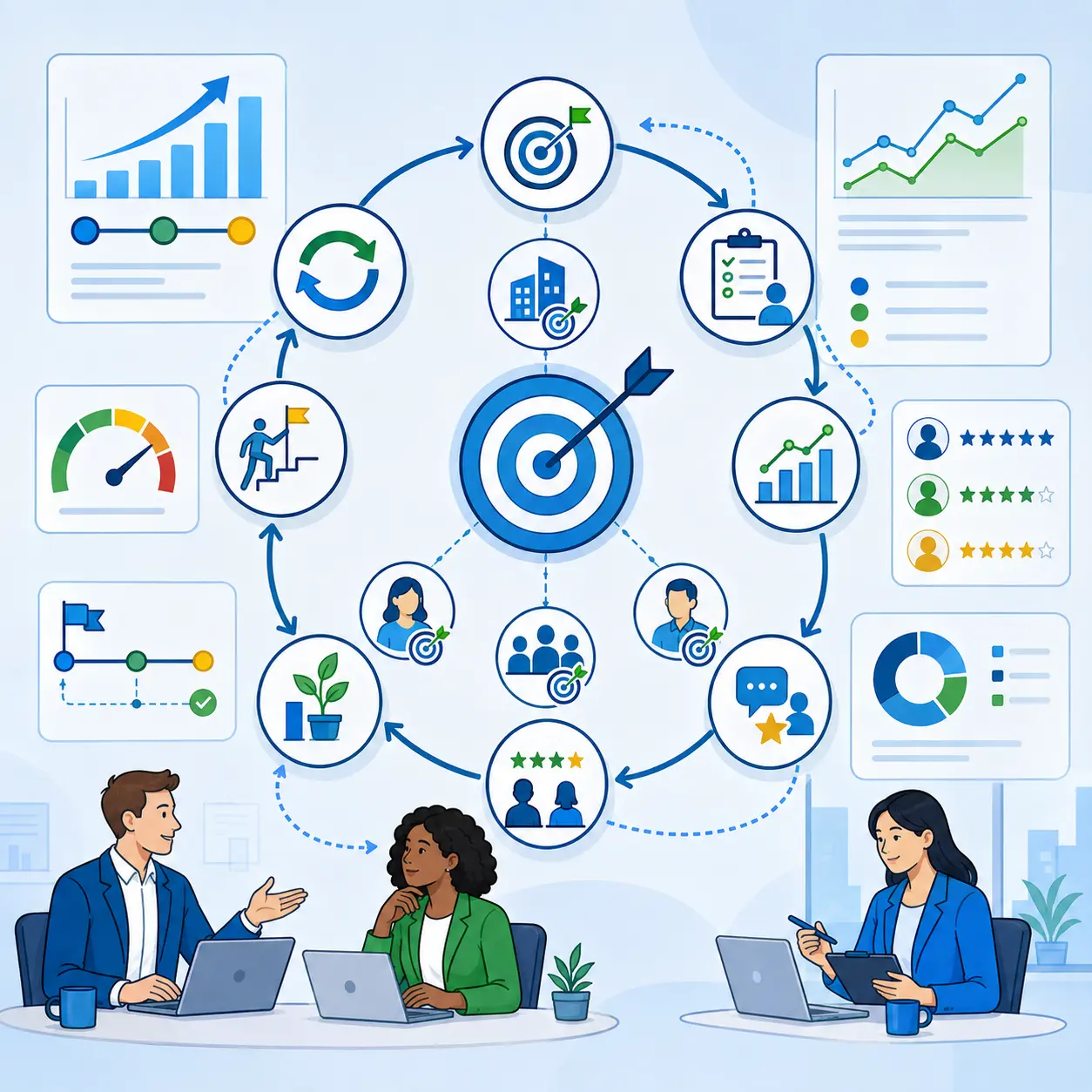
Definition and Scope
Performance Management is a disciplined and systematic process that enables organisations to monitor, evaluate, and improve individual and team performance in alignment with strategic objectives. It establishes a framework for goal setting, performance measurement, feedback, and development planning.
The core components include performance planning, continuous feedback, coaching, formal evaluations, and performance improvement initiatives. These elements operate across various business functions, leveraging digital platforms and data-driven insights to support transparency and informed decision-making. While Performance Management addresses behaviours, competencies, and outcomes, it does not encompass unrelated areas such as compensation design or HR policy governance.
Its primary purpose is to foster a high-performance culture through measurable contribution and accountability. Performance Management remains outcome-oriented, adaptable to organisational structures, and central to driving individual and collective success.
Why Performance Management Matters
Performance Management plays a vital role in aligning workforce efforts with strategic business objectives. It ensures that individual goals contribute to broader organisational outcomes, enabling agility and focus in fast-changing market environments.
As organisations navigate digital transformation and evolving workforce models, Performance Management becomes essential for maintaining clarity, accountability, and engagement. It helps address challenges such as misaligned priorities, underperformance, and lack of visibility—factors that can hinder execution and growth.
Executives, managers, and employees benefit in distinct ways:
- Executives: Gain real-time insights into workforce productivity, helping shape strategic direction and resource allocation.
- Managers: Use performance data to coach teams, prioritise tasks, and manage capacity more effectively.
- Employees: Receive clear expectations and feedback, enabling continuous growth and recognition.
By creating a performance-driven culture, organisations can unlock innovation, improve responsiveness, and sustain long-term value creation. Performance Management is not just a control mechanism—it is a strategic asset that empowers enterprise-wide excellence.
Business Case and Strategic Justification
A well-structured Performance Management approach provides a measurable, strategic advantage for organisations aiming to drive results and operational resilience. It ensures that performance is aligned with business priorities, while addressing inefficiencies and enabling agility in execution.
By linking individual contributions to strategic objectives, organisations gain visibility and control over performance outcomes. This alignment supports workforce optimisation, cost management, and risk mitigation. The investment in Performance Management typically yields returns through improved productivity, higher employee retention, and better resource utilisation—often reflected in key metrics such as revenue per employee or project delivery times.
The most common benefits of Performance Management include:
- Goal Alignment: Ensures individual and team goals support strategic objectives across the enterprise.
- Productivity Gains: Identifies performance gaps early and enables timely corrective action.
- Informed Decisions: Provides real-time data for planning, budgeting, and workforce allocation.
- Talent Development: Fosters continuous learning, career progression, and employee engagement.
- Operational Efficiency: Streamlines performance review cycles and reduces administrative overhead.
Performance Management offers tangible business value by connecting people, processes, and performance outcomes. It is a key enabler of strategic clarity and execution discipline across organisational levels.
DON’T REINVENT THE WHEEL!
Get access to our Enterprise Standards to Drive Performance, Minimise Cost and Maximise Value.
How is Performance Management Used?
Performance Management is applied through an integrated framework that ensures structured execution, learning, and improvement. Its value lies in consistently aligning people, processes, and strategy to deliver measurable performance outcomes.
The framework consists of three core perspectives:
- Key Phases & Process Steps: A ten-stage sequence guiding end-to-end implementation—from goal setting to continuous improvement.
- Identifying Pitfalls & Challenges: A diagnostic view of common missteps and breakdowns that hinder success, enabling proactive mitigation.
- Learning from Outperformers: A practice-driven lens that highlights methods and behaviours from high-performing organisations and teams.
Together, these perspectives form a practical, actionable approach to Performance Management. They help organisations avoid costly mistakes while embedding proven practices to drive productivity, engagement, and strategic alignment.
Key Phases and Process Steps
Performance Management follows a structured, repeatable sequence of activities that guide the organisation from goal setting to continuous improvement. This framework enables alignment, clarity, and accountability throughout the employee lifecycle.
The ten key phases of Performance Management include:
1. Strategic Alignment
Link individual roles and objectives to broader business goals.
2. Goal Setting
Define clear, measurable, and time-bound performance targets for teams and individuals.
3. Expectation Setting
Clarify behavioural standards, responsibilities, and success criteria.
4. Performance Planning
Develop action plans, timelines, and support structures for achieving goals.
5. Ongoing Feedback
Provide regular, constructive input to guide progress and reinforce behaviours.
6. Coaching and Development
Support employee growth through mentoring, training, and skill-building.
7. Mid-Cycle Check-Ins
Review progress, identify risks, and adjust plans where needed.
8. Formal Evaluation
Conduct structured reviews using performance data and manager input.
9. Recognition and Rewards
Acknowledge achievements and reinforce high performance.
10. Continuous Improvement
Analyse outcomes to refine processes and drive future enhancements.
This cycle ensures a dynamic and responsive approach to managing performance. By embedding feedback and learning into every stage, organisations can sustain engagement and optimise outcomes.
Identifying Pitfalls and Challenges: Antipatterns and Worst Practices
Many organisations struggle to unlock the full value of Performance Management due to recurring challenges. These typically stem from poorly designed processes, outdated behaviours, or misaligned incentives that undermine effectiveness.
5 Antipattern Examples:
5 Worst Practice Examples:
Avoiding these patterns is essential to ensure Performance Management drives motivation, alignment, and sustained improvement. A clear, relevant, and supportive approach builds trust and delivers measurable outcomes.
Learning from Outperformers: Best Practices and Leading Practices
Organisations that excel in Performance Management adopt proven approaches that go beyond basic compliance. Their success stems from embedding both best practices and forward-looking leading practices that create value across all levels.
5 Best Practice Examples:
5 Leading Practice Examples:
Adopting these practices ensures that Performance Management evolves into a dynamic and strategic enabler. It supports innovation, agility, and sustained workforce engagement.
Who is Typically Involved with Performance Management?
Effective Performance Management depends on the coordinated involvement of multiple stakeholders across the organisation. Clearly defined roles ensure consistent execution, shared accountability, and alignment with strategic objectives.
The five primary roles typically involved include:
- Executive Sponsor: Provides strategic direction, secures funding, and champions organisation-wide adoption.
- HR Performance Lead: Designs the framework, policies, and tools supporting performance cycles and coaching.
- Line Manager: Executes daily performance oversight, delivers feedback, and ensures goal alignment.
- Employee or Contributor: Owns individual performance responsibilities and actively participates in reviews and development.
- Data & Analytics Specialist: Provides reporting, insights, and dashboards to inform reviews and decision-making.
Different stakeholder groups engage with Performance Management in distinct ways:
- Executives: Use performance data to steer business strategy and drive accountability.
- Middle Managers: Align team objectives and manage performance dynamics at the operational level.
- End Users: Benefit from clarity, growth opportunities, and transparent feedback channels.
By defining responsibilities and expectations clearly, organisations create a performance culture that supports collaboration, learning, and results.
Where is Performance Management Applied?
Performance Management is applied across a wide range of organisational domains to align activities with goals, improve efficiency, and drive continuous improvement. Its adaptability makes it relevant in both strategic planning and day-to-day operations.
The five primary domains where Performance Management is commonly applied include:
- Finance: Tracks budget adherence, cost efficiency, and ROI on strategic initiatives.
- IT & Digital Services: Monitors service levels, incident response times, and delivery milestones.
- Operations: Optimises productivity, throughput, and quality across supply chains and production lines.
- Customer Service: Measures responsiveness, resolution rates, and satisfaction levels to enhance experience.
- Sales & Marketing: Aligns performance with lead generation, conversion, and revenue growth targets.
Illustrative scenarios include:
- Product Development Teams: Use Performance Management to align milestones, manage risks, and measure delivery outcomes.
- Shared Service Centres: Apply it to optimise resource utilisation and track performance across support functions.
This broad applicability ensures that Performance Management delivers tangible results across industries, departments, and business models. Its flexibility makes it a core enabler of enterprise effectiveness.
When Should You Embrace Performance Management?
Timing plays a critical role in the successful adoption of Performance Management. Implementing it when the organisation is ready—both in context and capability—maximises impact and ensures smoother integration into existing structures.
Five key scenarios that signal the right time to adopt Performance Management include:
- Rapid Organisational Growth: Expanding teams require structure and alignment across roles and goals.
- Post-Merger or Restructuring: New organisational models demand performance visibility and standardisation.
- Digital Transformation Initiatives: New technologies need performance frameworks to guide adoption and impact.
- Market or Regulatory Pressure: Increased scrutiny requires transparent, measurable accountability.
- Persistent Underperformance: Ongoing issues with outcomes or engagement highlight the need for structured improvement.
Essential prerequisites include:
- Stakeholder Alignment & Leadership Commitment
- Clearly Defined Strategic Goals & KPIs
- Sufficient Resource Allocation & Tooling
- Foundational HR or Talent Processes in Place
- A Culture Open to Feedback & Continuous Improvement
Recognising these signals helps organisations implement Performance Management effectively and sustainably. With the right timing and readiness, it becomes a catalyst for value creation and performance excellence.
Most Common Performance Management Artefacts
Artefacts play a critical role in operationalising Performance Management by providing structure, consistency, and traceability. These tools ensure performance activities are documented, measurable, and aligned with strategic priorities.
The five most common Performance Management artefacts include:
- Performance Plan Template: Documents individual or team goals, KPIs, and development actions aligned with business objectives.
- Goal-Setting Framework: Provides a structured approach (e.g., SMART or OKRs) for defining and cascading performance targets.
- Feedback & Coaching Log: Tracks informal and formal feedback discussions, coaching actions, and development notes.
- Performance Review Form: Used for structured evaluations during mid-year or annual reviews, combining self-assessment and manager input.
- Performance Dashboard: Visual tool that consolidates real-time performance data, metrics, and trends across teams or functions.
These artefacts help standardise the Performance Management process, increase transparency, and enable continuous improvement. When consistently applied, they support decision-making, engagement, and accountability throughout the organisation.
The Artefacts Table
The table below summarises the five most common artefacts used in Performance Management. Each artefact contributes to a consistent, measurable, and outcome-driven approach by guiding performance-related activities across roles and functions.
| Artefact | Description | Practical Use |
|---|---|---|
| Performance Plan Template | A structured document for defining individual or team objectives, KPIs, and growth actions. | Used during onboarding, review cycles, or strategy resets to align goals with business priorities. |
| Goal-Setting Framework | An approach such as SMART or OKRs to define and track performance objectives. | Applied at the start of each cycle to establish consistent, measurable goals across teams. |
| Feedback & Coaching Log | A record of ongoing performance feedback, coaching sessions, and development milestones. | Maintained by managers to monitor progress and support employee development in real time. |
| Performance Review Form | A formal template for evaluating performance based on results and behavioural expectations. | Completed during structured review periods to assess performance and plan next steps. |
| Performance Dashboard | A visual tool displaying key metrics, trends, and performance insights. | Used by leaders to monitor real-time performance and identify areas for action or improvement. |
These artefacts create a consistent foundation for effective Performance Management, supporting both strategic alignment and day-to-day execution. By embedding these tools into the workflow, organisations can foster accountability, enable data-driven decisions, and promote continuous improvement.