
Enterprise Management
Governance
Reference Content ID: #LEAD-ES10018GO
Introduction to Governance
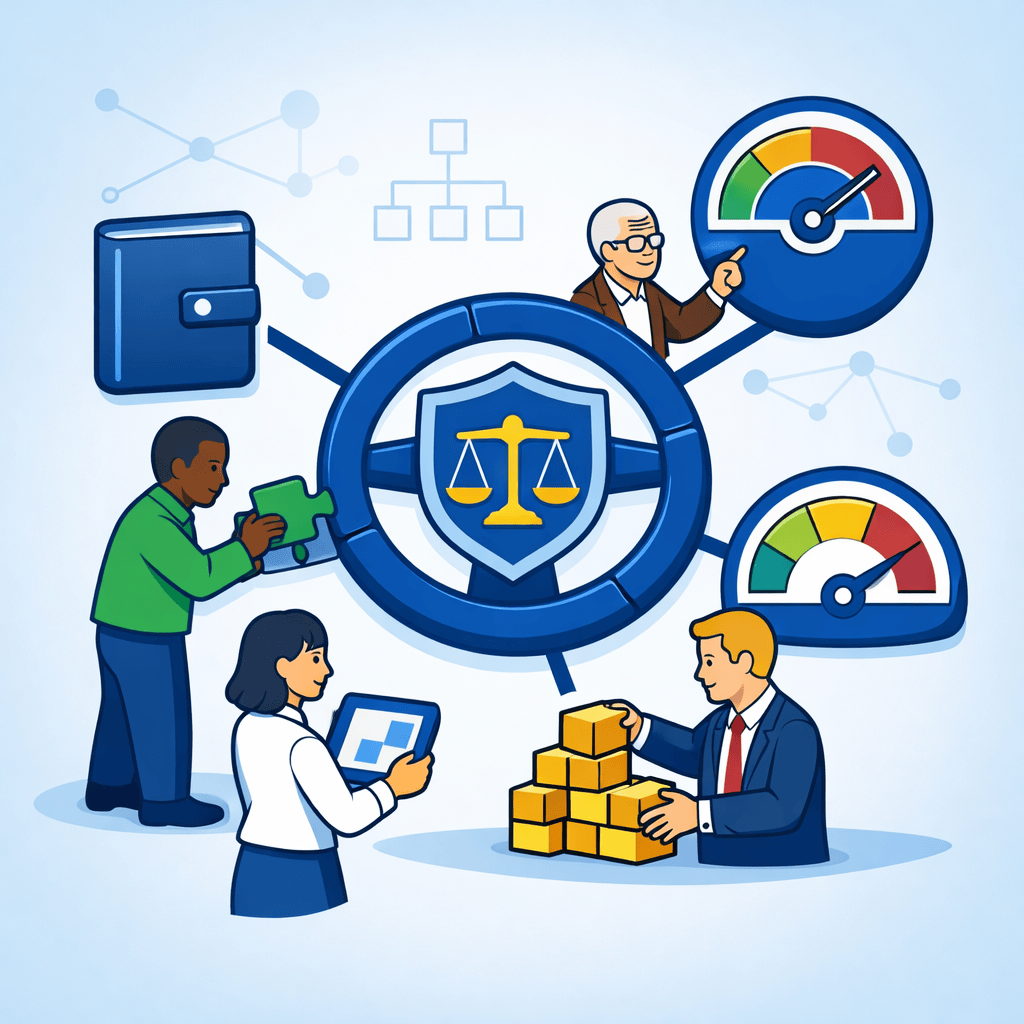
Governance provides the structure, policies, and oversight necessary to ensure that decisions, behaviours, and outcomes align with strategic objectives. It serves as a foundational element of organisational integrity, guiding both compliance and performance across departments and teams.
At its core, governance establishes clear accountability, decision rights, and control mechanisms. It encompasses leadership structures, risk management, regulatory adherence, and performance monitoring. These components help organisations balance agility with control, enabling consistent and ethical operations across business functions.
Governance applies broadly—whether in centralised enterprises, federated structures, or distributed teams. It supports collaboration across functions, enhances productivity through aligned goals, safeguards well-being via ethical practices, and strengthens digital workflows for on-site, hybrid, or remote teams.
A strong governance model creates transparency and trust, ensuring organisations operate effectively and responsibly. Its relevance continues to grow as workforces evolve and digital complexity increases.
Definition and Scope
Governance refers to the system by which an organisation is directed, controlled, and held to account. It provides the structural framework for decision-making, oversight, and alignment with corporate objectives, values, and regulatory requirements.
The scope of governance includes leadership accountability, policy setting, risk management, compliance, and performance evaluation. It ensures that roles, responsibilities, and workflows are clearly defined and integrated across business and technology domains. While governance shapes strategic direction and operational integrity, it does not directly manage day-to-day operations or substitute for functional leadership.
Governance operates across business units, IT environments, and partner ecosystems. It harmonises policies, controls, and oversight across centralised, decentralised, and hybrid models.
Effective governance establishes boundaries and trust, promoting organisational consistency and resilience across changing contexts and structures.
Why Governance Matters
Governance is critical to aligning organisational actions with strategic intent. It provides the mechanisms to manage complexity, ensure accountability, and enable informed decision-making. In dynamic business environments, governance is essential for maintaining direction, compliance, and operational stability.
As market demands, technologies, and regulations evolve, governance helps organisations remain agile while upholding control. It supports the integration of emerging technologies, ensures regulatory alignment, and mitigates risk exposure. Without structured governance, organisations risk fragmented decision-making, inefficiencies, and reduced stakeholder trust.
Executives, managers, and end users all benefit from clear governance structures:
- Executive Oversight: Enables strategic steering by providing reliable data, accountability frameworks, and cross-functional visibility.
- Operational Efficiency: Helps managers streamline processes, allocate resources effectively, and reduce duplication of effort.
- User Empowerment: Offers end users clarity on policies, roles, and procedures, fostering consistency and collaboration.
Governance strengthens organisational coherence, enabling sustainable growth and innovation. Its value lies in enabling both resilience and responsiveness across all levels.
Business Case and Strategic Justification
A well-structured governance model supports strategic alignment, risk mitigation, and performance improvement. It enables organisations to translate strategy into execution by clarifying roles, setting controls, and guiding consistent decision-making across functions.
Governance addresses challenges such as operational inefficiencies, unclear accountability, regulatory pressure, and data inconsistency. It creates a platform for opportunity—allowing organisations to scale, innovate responsibly, and ensure compliance. The return on investment includes reduced risk exposure, improved operational clarity, enhanced trust, and measurable efficiency gains. Metrics such as reduced rework, faster decision cycles, and improved audit readiness often reflect governance value.
The benefits of governance typically include:
- Strategic Alignment: Ensures all initiatives and investments support overarching business goals.
- Risk Reduction: Identifies, monitors, and mitigates regulatory, operational, and reputational risks.
- Operational Consistency: Standardises decision-making and business processes across units and regions.
- Resource Optimisation: Enhances visibility into resource allocation, reducing waste and duplication.
- Informed Decision-Making: Provides accurate, timely data and reporting structures for confident leadership action.
Governance offers both strategic and operational payoffs, making it a foundational enabler of transformation. Investing in governance helps organisations navigate complexity and deliver measurable outcomes.
DON’T REINVENT THE WHEEL!
Get access to our Enterprise Standards to Drive Performance, Minimise Cost and Maximise Value.
How is Governance Used?
Governance is applied through structured frameworks that align strategy, operations, and oversight. Its practical use is guided by a blend of process discipline, risk awareness, and performance optimisation.
Effective governance is best understood through three core perspectives:
- The process stages that define how governance is established and maintained.
- The common pitfalls that reveal what undermines governance efforts
- The exemplar practices that demonstrate how leading organisations succeed.
These perspectives help tailor governance to different contexts while preserving consistency and value.
The following subsections provide further detail:
- Key Phases and Process Steps defines the core activities and sequencing.
- Identifying Pitfalls and Challenges outlines frequent missteps and weak spots.
- Learning from Outperformers highlights best practices proven in high-performing settings.
Together, these perspectives form a practical and actionable approach to using governance effectively. They ensure that governance is not only well-designed but also well-executed and resilient over time.
Key Phases and Process Steps
Governance is most effective when applied through a structured, step-by-step approach that aligns strategic intent with operational control. The following ten phases represent the typical governance lifecycle, from initial planning to performance monitoring and continuous improvement.
1. Governance Visioning
Define the purpose, scope, and strategic relevance of governance for the organisation.
2. Stakeholder Alignment
Identify key roles, responsibilities, and decision-making authorities across business units.
3. Policy & Standard Definition
Establish rules, guidelines, and protocols to ensure consistent and compliant behaviour.
4. Control Framework Design
Build the structures and mechanisms for oversight, accountability, and escalation.
5. Process Integration
Embed governance practices into operational, financial, and technological workflows.
6. Communication & Training
Ensure stakeholder understanding through targeted communication and skill development.
7. Enablement via Tools
Implement digital solutions to automate governance processes and enhance transparency.
8. Monitoring & Reporting
Track compliance, performance, and governance outcomes through structured reporting.
9. Review & Auditing
Conduct regular reviews and audits to ensure policies are followed and goals are met.
10. Governance Optimisation
Refine the governance model based on feedback, performance data, and business change.
These phases provide a repeatable and scalable framework to embed governance into everyday practice. When executed in sequence, they help organisations achieve both control and agility.
Identifying Pitfalls and Challenges: Antipatterns and Worst Practices
While governance provides structure and clarity, its effectiveness can be undermined by recurring pitfalls. These often take the form of antipatterns—misguided patterns that seem logical but cause dysfunction—and worst practices that erode value and trust.
5 Antipattern Examples:
5 Worst Practice Examples:
Avoiding these traps ensures governance adds clarity, not complexity. Recognising these patterns helps leaders build governance that is practical, respected, and results-driven.
Learning from Outperformers: Best Practices and Leading Practices
While governance provides structure and clarity, its effectiveness can be undermined by recurring pitfalls. These often take the form of antipatterns—misguided patterns that seem logical but cause dysfunction—and worst practices that erode value and trust.
5 Best Practice Examples:
5 Leading Practice Examples:
Avoiding these traps ensures governance adds clarity, not complexity. Recognising these patterns helps leaders build governance that is practical, respected, and results-driven.
Who is Typically Involved with Governance?
Governance succeeds when the right people are engaged with clear responsibilities and coordinated collaboration. Understanding who contributes to governance—strategically and operationally—is essential for building accountability, gaining buy-in, and ensuring implementation success.
The five primary roles typically involved in governance include:
- Executive Sponsor: Sets direction, secures funding, and champions governance at the board or C-level.
- Governance Lead: Designs and coordinates the governance model, ensuring alignment with strategic priorities.
- Process Owner: Oversees compliance and consistency within specific domains, bridging business and operations.
- Risk & Compliance Officer: Ensures legal, regulatory, and policy adherence across all functions.
- IT/Systems Manager: Implements and maintains governance-enabling technologies and tools.
Different stakeholder groups contribute in distinct ways:
- Executives use governance to steer strategy and ensure corporate integrity.
- Managers apply governance to align operations, reduce risk, and drive performance.
- Technical teams use governance tools to standardise processes and ensure secure digital workflows.
Clear roles and ownership are critical to making governance work. A defined structure enables collaboration, clarity, and measurable results across all levels.
Where is Governance Applied?
Governance spans multiple organisational areas, providing structure, oversight, and alignment across both strategic and operational activities. Its application ensures that different functions operate within agreed policies, processes, and performance expectations.
The five primary domains where governance is typically applied include:
- Corporate Strategy: Aligns organisational priorities with long-term goals and stakeholder expectations.
- Finance: Ensures fiscal responsibility, compliance, and transparency in budgeting and reporting.
- IT & Digital Services: Maintains security, standardisation, and effective management of digital assets and infrastructure.
- Operations: Optimises processes, resources, and risk management for consistent delivery.
- Human Resources: Guides ethical practices, compliance with labour laws, and workforce well-being policies.
Illustrative scenarios include:
- A cross-functional project uses governance to standardise decision-making, reducing delays and miscommunication.
- An IT programme applies governance to enforce cybersecurity standards across multiple business units.
Governance’s reach across functions enables it to unify processes, reduce risk, and enhance performance in diverse contexts. Its adaptability makes it an essential framework for organisations of all sizes and industries.
When Should You Embrace Governance?
The success of governance depends heavily on implementing it at the right time and under the right conditions. Recognising organisational signals and ensuring readiness are essential to maximising its impact and avoiding disruption.
Five key scenarios indicating the right moment to adopt governance include:
- Rapid Growth: Scaling operations requires structured oversight to maintain consistency and control.
- Market or Regulatory Change: New rules or shifting market conditions demand coordinated compliance and adaptation.
- Technology Modernisation: Introducing new platforms or systems requires governance to standardise use and secure assets.
- Mergers or Acquisitions: Integration of entities benefits from unified policies and decision frameworks.
- Performance Declines: Governance helps identify root causes and implement corrective actions.
Prerequisites include:
- Stakeholder alignment and executive sponsorship
- Adequate resources and budget allocation
- Clear strategic objectives for governance
- Established baseline processes and metrics
Timely adoption of governance ensures that it supports transformation rather than reacting to crises. Meeting the prerequisites strengthens the foundation for long-term, sustainable results.
Most Common Governance Artefacts
Governance relies on a set of well-defined artefacts and tools that provide structure, ensure consistency, and enable oversight. These artefacts serve as tangible reference points, guiding decision-making, compliance, and performance monitoring across the organisation.
The five most common governance artefacts include:
- Governance Framework Document: Outlines principles, policies, structures, and responsibilities for governance.
- Policy & Standards Repository: Centralised library of approved policies, procedures, and compliance standards.
- Decision Rights Matrix: Defines authority levels and decision-making responsibilities across roles and functions.
- Risk & Compliance Register: Tracks identified risks, mitigation actions, and regulatory obligations.
- Performance Dashboard: Provides real-time visibility into governance metrics, compliance status, and operational outcomes.
These artefacts give governance structure and visibility, ensuring all stakeholders have access to clear guidance and performance data. When maintained and actively used, they help organisations apply governance consistently and adapt it to evolving needs.
The Artefacts Table
This table summarises the essential artefacts that operationalise governance, providing a shared reference for structure, control, and transparency. Each entry states what the artefact is and how it is applied in day-to-day work to support effective oversight and decision-making.
| Artefact | Description | Practical use |
|---|---|---|
| Governance Framework Document | A concise blueprint that defines principles, roles, policies, and operating structures for governance. | Used to onboard leaders and teams, align programmes to standards, and validate new initiatives against governance criteria. |
| Policy & Standards Repository | A central, version-controlled library of approved policies, procedures, and compliance standards. | Referenced by managers and auditors to ensure consistent execution, evidence compliance, and manage policy updates. |
| Decision Rights Matrix | A clear mapping of who can decide, approve, or escalate across processes and investments. | Applied to speed approvals, remove ambiguity, and structure steering committees and change control. |
| Risk & Compliance Register | A structured log of risks, controls, obligations, owners, and mitigation actions. | Reviewed in governance forums to prioritise remediation, track regulatory duties, and report exposure. |
| Performance Dashboard | A monitored set of KPIs and control indicators that show governance effectiveness and outcomes. | Used by executives to monitor trends, trigger corrective actions, and communicate results to stakeholders. |
Together, these artefacts translate governance from intent into practice by clarifying expectations, codifying controls, and making performance visible. Maintaining them as living assets ensures governance remains current, auditable, and effective across changing organisational contexts.