
Enterprise Information & Technology
Business Model of IT
Reference Content ID: #LEAD-ES50002BC
Introduction to Business Model of IT
The Business Model of IT defines how technology delivers value by aligning IT capabilities with business goals. It establishes the structure for managing digital assets, services, and innovation across the enterprise.
Through integrated governance, service delivery, and cost management, it ensures technology investments drive measurable outcomes. Its principles apply across industries and operating models—supporting on-site operations, hybrid teams, and remote environments alike.
By enabling automation, collaboration, and digital workflows, it enhances productivity, fosters employee well-being, and strengthens organisational agility. The model serves as a foundational blueprint for leveraging IT as a strategic business enabler.
Definition and Scope
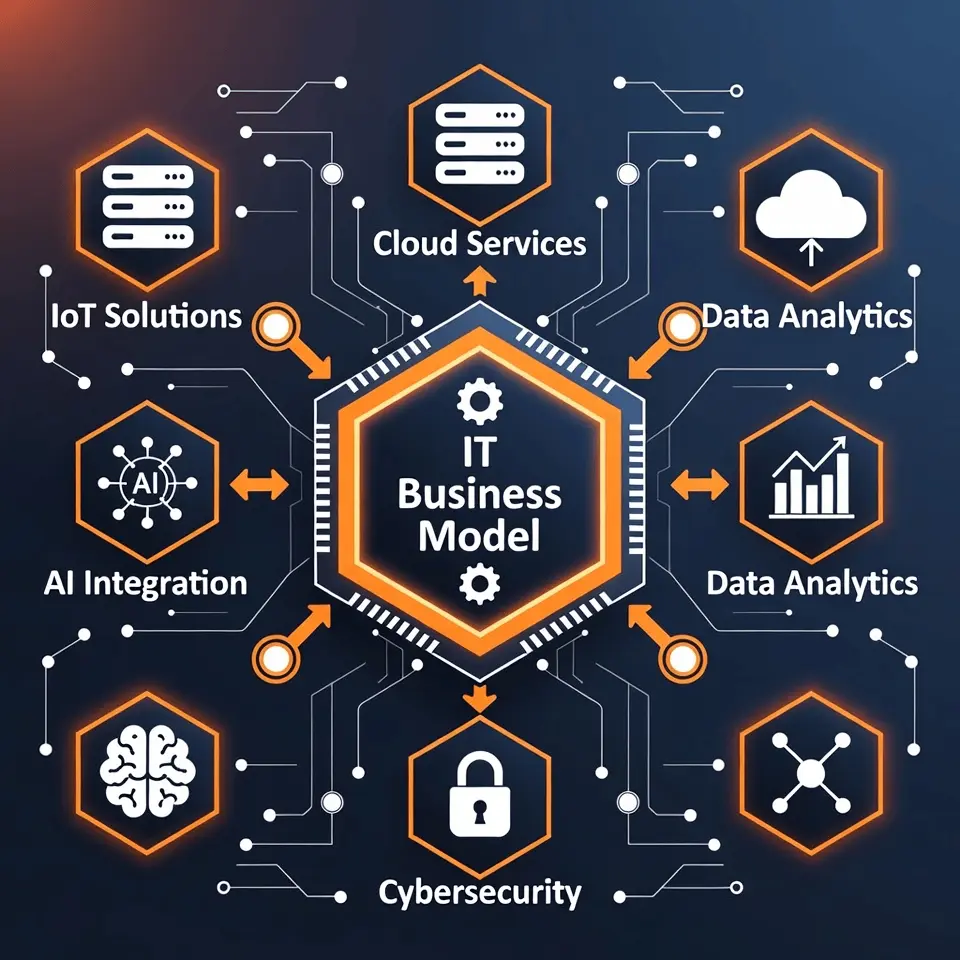
The Business Model of IT defines how an organisation structures, delivers, and governs technology to create business value. It integrates strategic planning, financial management, service design, and operational execution into a unified framework that aligns IT outcomes with corporate objectives.
Its scope includes demand management, sourcing, governance, and performance measurement but excludes purely technical implementation or isolated project activities. The model’s domains—strategy, operations, finance, and innovation—work interdependently to ensure agility, accountability, and efficiency.
It provides a boundary between business enablement and technical execution, ensuring IT functions as a proactive business partner rather than a support function.
Why Business Model of IT Matters
The Business Model of IT is vital because it connects technology investments to strategic business outcomes. It enables organisations to adapt to market change, drive digital transformation, and optimise resources in an increasingly competitive environment. By clarifying how IT creates value, it transforms technology from a cost centre into a strategic growth enabler. Executives, managers, and end users each gain tangible benefits:
- Strategic alignment: Supports leadership in prioritising IT initiatives that advance corporate goals.
- Operational efficiency: Helps managers streamline processes and reduce redundancy.
- Innovation enablement: Empowers teams to experiment and scale new digital capabilities.
It ensures sustained relevance, resilience, and return on technology investments across all organisational levels.
Business Case and Strategic Justification
A strong business case for the Business Model of IT lies in its ability to link technology performance with strategic intent. It enables organisations to prioritise investments, manage costs, and accelerate digital transformation. By aligning IT with corporate goals, it addresses inefficiencies, governance gaps, and innovation barriers. The return on investment is seen through improved service delivery, reduced operational costs, and greater value realisation. Common benefits include:
- Strategic alignment: Ensures technology directly supports business priorities.
- Cost optimisation: Improves financial transparency and resource efficiency.
- Performance visibility: Provides metrics for accountability and outcome tracking.
- Operational agility: Enhances responsiveness to market or technology changes.
- Innovation capacity: Creates a foundation for continuous digital advancement.
Adopting this model secures IT’s role as a measurable contributor to business success and long-term competitiveness.
DON’T REINVENT THE WHEEL!
Get access to our Enterprise Standards to Drive Performance, Minimise Cost and Maximise Value.
How is Business Model of IT Used?
The Business Model of IT is applied through a structured framework that balances process discipline, risk awareness, and performance excellence. It provides organisations with a roadmap for translating strategy into measurable action.
- The Key Phases and Process Steps outline how IT capabilities are designed, delivered, and managed throughout their lifecycle.
- Identifying Pitfalls and Challenges helps avoid inefficiencies and governance failures that limit value creation.
- Learning from Outperformers captures best and leading practices that demonstrate proven success.
Together, these perspectives ensure that IT functions operate strategically, sustainably, and in alignment with business outcomes.
Key Phases and Process Steps
The Business Model of IT follows a structured ten-phase approach that guides organisations from strategic intent to operational excellence. Each phase builds on the previous to ensure consistency, alignment, and measurable results across the IT value chain.
1. Strategic Alignment
Define how IT supports corporate goals and priorities.
2. Capability Assessment
Evaluate current IT strengths, gaps, and maturity.
3. Value Proposition Design
Clarify IT’s contribution to business outcomes.
4. Governance Framework
Establish accountability, decision rights, and contr
5. Financial Management
Plan and manage IT budgets, costs, and investments.
6. Service Portfolio Management
Structure offerings around business demand.
7. Operating Model Design
Define roles, processes, and delivery mechanisms.
8. Performance Measurement
Track KPIs and benchmark effectiveness.
9. Continuous Improvement
Identify optimisation and innovation opportunities.
10. Stakeholder Communication
Report value and maintain engagement.
Together, these phases ensure IT operates as a strategic, transparent, and value-driven function.
Identifying Pitfalls and Challenges: Antipatterns and Worst Practices
Implementing the Business Model of IT can be undermined by recurring pitfalls that weaken alignment and impact. Recognising and avoiding these patterns helps sustain long-term value.
5 Antipattern Examples:
5 Worst Practice Examples:
Avoiding these traps ensures the model remains effective, agile, and outcome-driven.
Learning from Outperformers: Best Practices and Leading Practices
Successful organisations apply proven best and leading practices to ensure their Business Model of IT delivers sustainable value. These approaches balance governance, agility, and innovation to drive measurable outcomes.
5 Best Practice Examples:
5 Leading Practice Examples:
These practices transform IT into a strategic enabler of long-term business performance.
Who is Typically Involved with Business Model of IT?
Clear role definition is essential to ensure accountability, alignment, and value delivery within the Business Model of IT. Each participant contributes to translating strategy into measurable outcomes.
Key roles include:
- Executive Sponsor: Champions the initiative and secures organisational commitment.
- CIO or IT Director: Defines strategic direction and governance priorities.
- Business Relationship Manager: Bridges business needs with IT capabilities.
- Service Owner: Oversees service quality and lifecycle performance.
- Operations Manager: Ensures efficient execution and continuous improvement.
Stakeholders benefit in distinct ways:
- Executives: Gain transparency on value creation and investment impact.
- Managers: Improve coordination across teams and resources.
- End Users: Experience enhanced service reliability and usability.
These roles together enable disciplined, outcome-focused IT management.
Where is Business Model of IT Applied?
The Business Model of IT applies across diverse organisational domains, ensuring technology delivers measurable business value. It provides structure for aligning digital capabilities with enterprise objectives.
Key areas include:
- Finance: Improves cost transparency and investment governance.
- Operations: Streamlines workflows and resource utilisation.
- Customer Service: Enhances digital support channels and responsiveness.
- Human Resources: Enables digital workplace and employee experience initiatives.
- IT Management: Integrates service delivery, governance, and performance control.
Illustrative applications include:
- Digital Transformation Projects: Aligning IT architecture with business outcomes.
- Shared Service Models: Unifying processes across departments for efficiency.
Its adaptability allows organisations to optimise both strategic planning and day-to-day operations.
When Should You Embrace Business Model of IT?
Timing is critical to ensure the Business Model of IT delivers maximum impact. Organisations should adopt it when conditions support alignment, scalability, and measurable value creation.
Common triggers include:
- Rapid Growth: Need to scale IT capabilities with business expansion.
- Digital Transformation: Aligning technology strategy with enterprise goals.
- Market Disruption: Responding to competitive or regulatory change.
- Operational Inefficiency: Addressing fragmented processes and legacy systems.
- Technology Renewal: Modernising infrastructure or service delivery models.
Prerequisites include:
- Executive Sponsorship: Leadership commitment to guide and champion the initiative.
- Stakeholder Alignment: Shared understanding of goals, roles, and expectations.
- Financial Transparency: Clear visibility into IT costs, budgets, and value drivers.
- Mature Process Governance: Established frameworks for accountability and decision-making.
When these conditions are met, implementation becomes more effective, ensuring that IT drives strategic, sustainable business outcomes.
Most Common Business Model of IT Artefacts
The Business Model of IT relies on specific artefacts that structure decision-making, governance, and performance tracking. These tools ensure consistency, transparency, and alignment between IT and business objectives.
Common artefacts include:
- IT Strategy Map: Visualises how technology initiatives support corporate goals.
- Service Portfolio Catalogue: Defines IT services, ownership, and value contribution.
- Financial Transparency Model: Tracks costs, budgets, and return on investment.
- Governance Framework Document: Establishes policies, roles, and accountability structures.
- Performance Dashboard: Monitors KPIs and operational effectiveness in real time.
Together, these artefacts enable structured communication, informed decisions, and measurable outcomes that sustain IT’s role as a strategic business partner.
The Artefacts Table
This table summarises core artefacts used to operationalise the Business Model of IT. It clarifies each artefact’s purpose and how teams apply it day to day.
| Artefact | Description | Practical use |
|---|---|---|
| IT Strategy Map | Links IT initiatives to business goals and outcomes. | Guides annual planning and prioritisation workshops. |
| Service Portfolio Catalogue | Defines services, owners, SLAs, and value statements. | Aligns funding and roadmaps with demand. |
| Financial Transparency Model | Shows costs, budgets, and unit economics. | Supports chargeback/showback and investment cases. |
| Governance Framework Document | Sets decision rights, policies, and controls. | Accelerates approvals and risk reviews. |
| Performance Dashboard | Tracks KPIs, risks, and benefits realisation. | Enables weekly performance stand-ups. |
Together, these artefacts drive clarity, accountability, and measurable results. They help teams make faster decisions and sustain value delivery.