
Enterprise Information & Technology
Artificial Intelligence
Reference Content ID: #LEAD-ES50008PGIDBC
Introduction to Artificial Intelligence
Artificial Intelligence (AI) is the discipline of creating systems capable of performing tasks that traditionally require human intelligence, such as learning, reasoning, problem-solving, and pattern recognition. It encompasses core areas like machine learning, natural language processing, computer vision, and decision automation.
AI adapts across industries to automate processes, enhance decision-making, and personalize experiences. By integrating AI, organizations boost productivity, streamline digital workflows, and improve collaboration among on-site, hybrid, and remote teams.
AI also contributes to employee well-being by reducing repetitive tasks and enabling smarter work environments. AI’s scalable relevance makes it a transformative force in today’s enterprise landscape, redefining how businesses operate, interact, and evolve.
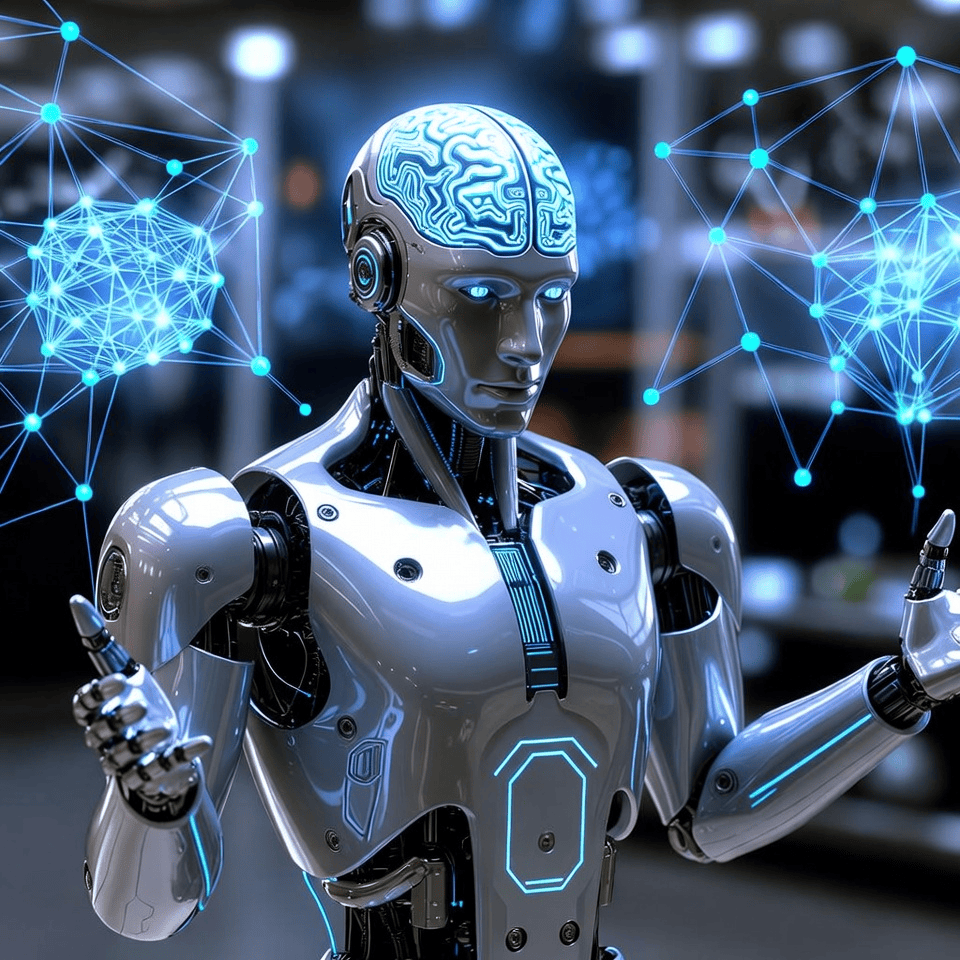
Definition and Scope
Artificial Intelligence (AI) refers to the simulation of human intelligence in machines that are designed to think, learn, and adapt autonomously. It is rooted in algorithms, data processing, and computational models that enable systems to perform cognitive functions.
AI encompasses domains such as machine learning, natural language processing, robotics, and computer vision. These components interact to deliver intelligent automation, predictive insights, and contextual understanding across business environments.
While AI includes both narrow and general intelligence models, it does not cover traditional automation without adaptive logic or rule-based scripting. AI’s scope is defined by its ability to learn from data and make decisions under uncertainty, making it a powerful enabler of innovation and operational efficiency.
Why Artificial Intelligence Matters
Artificial Intelligence (AI) plays a vital role in helping organizations align with strategic goals, adapt to rapid technological change, and improve core operations. It enables data-driven decisions, faster responses to market demands, and innovation at scale.
AI supports executives with predictive insights, empowers managers to optimize resources, and enhances user experience through automation and personalisation.
- Executive Insight: AI-driven forecasting tools improve strategic planning and risk management by analysing trends, anomalies, and performance indicators in real time.
- Operational Efficiency: Automated workflows reduce manual effort and error in processes such as supply chain logistics, customer service, and financial operations.
- Product Innovation: AI enables rapid prototyping, iterative design, and customer behaviour analysis to inform product development and market fit.
AI continues to be a cornerstone of transformation, driving measurable business value and sustainable competitive advantage.
Business Case and Strategic Justification
Artificial Intelligence (AI) represents a strategic investment for organizations aiming to enhance competitiveness, agility, and resilience. It aligns with digital transformation goals by addressing inefficiencies, supporting data-driven decisions, and enabling scalable innovation.
AI delivers strong return on investment through reduced operational costs, faster time to market, and improved customer experience. Metrics such as process automation rates, decision accuracy, and revenue uplift validate its impact.
Typical benefits of Artificial Intelligence include:
- Cost Optimisation: Reduces labour-intensive tasks through intelligent automation.
- Faster Decision-Making: Enhances real-time analytics and predictive capabilities.
- Customer Personalisation: Delivers tailored experiences across channels.
- Productivity Gains: Streamlines workflows and boosts team efficiency.
- Innovation Enablement: Supports agile experimentation and new business models.
AI’s strategic value is clear—early adoption sets the foundation for continuous improvement, competitive advantage, and long-term performance.
DON’T REINVENT THE WHEEL!
Get access to our Enterprise Standards to Drive Performance, Minimize Cost and Maximize Value.
How is Artificial Intelligence Used?
Artificial Intelligence (AI) is most effectively applied through a structured lens that balances process, awareness of risks, and adoption of proven practices. A comprehensive approach ensures AI initiatives deliver value and avoid common implementation missteps.
The application framework consists of three core perspectives:
- Key Phases and Process Steps: Outlines the typical stages from planning to scaling AI, helping teams manage complexity, coordinate execution, and integrate with enterprise architecture.
- Identifying Pitfalls and Challenges: Highlights frequent mistakes, such as misaligned use cases, inadequate data governance, or lack of user adoption, enabling proactive mitigation before they impact performance.
- Learning from Outperformers: Showcases best and leading practices from high-performing organizations that accelerate implementation, foster trust, and increase business-wide adoption.
Together, these perspectives guide organisations in deploying AI with purpose, clarity, and measurable outcomes. They form the foundation for resilient, scalable, and high-value AI solutions.
Key Phases and Process Steps
A structured, end-to-end approach to Artificial Intelligence (AI) ensures consistent outcomes, manageable risk, and measurable value. The following ten phases form a common framework that guides organisations through planning, development, and operational scaling. These phases create a repeatable structure for successful AI implementation, supporting both innovation and control.
1. Opportunity Identification
Pinpoints business challenges where AI can deliver measurable value.
2. Use Case Definition
Clarifies objectives, success criteria, and scope for AI solutions.
3. Data Assessment
Evaluates data availability, quality, and relevance for training models.
4. Model Selection
Chooses the appropriate AI techniques based on the problem and data.
5. Solution Design
Integrates AI into workflows, systems, and user experiences.
6. Development and Testing
Builds, trains, and validates models in controlled environments.
7. Pilot Implementation
Deploys the solution in a limited setting to gather feedback.
8. Evaluation and Refinement
Measures performance and adjusts for accuracy and usability.
9. Scaling and Integration
Expands deployment across functions or geographies.
10. Monitoring and Governance
Ensures ongoing performance, compliance, and ethical use.
These phases create a repeatable structure for successful AI implementation, supporting both innovation and control.
Identifying Pitfalls and Challenges: Antipatterns and Worst Practices
Successful use of Artificial Intelligence (AI) depends as much on avoiding missteps as following best practices. Many organisations fall into familiar traps that hinder progress, waste resources, or create resistance.
5 Antipattern Examples:
5 Worst Practice Examples:
Recognising these patterns early helps build resilient, ethical, and sustainable AI initiatives.
Learning from Outperformers: Best Practices and Leading Practices
Outperforming organizations demonstrate that structured, people-centric, and iterative approaches significantly enhance the success of Artificial Intelligence (AI) initiatives. They follow a blend of best and leading practices to unlock measurable impact. These practices drive adoption, mitigate risks, and maximise sustainable AI outcomes.
5 Best Practice Examples:
5 Leading Practice Examples:
These practices drive adoption, mitigate risks, and maximise sustainable AI outcomes.
Who is Typically Involved with Artificial Intelligence?
Clear role definition is essential for successful Artificial Intelligence (AI) initiatives, ensuring alignment, accountability, and collaboration across the organisation. Each participant plays a distinct part in shaping, delivering, and sustaining AI outcomes.
Key roles typically involved include:
- Executive Sponsor: Champions AI investment and aligns it with strategic goals.
- AI Program Manager: Oversees scope, milestones, and resource coordination.
- Data Scientist: Designs and trains AI models using relevant data.
- IT Architect: Integrates AI solutions into systems and infrastructure.
- Change Lead: Ensures adoption, training, and user engagement.
Stakeholders influence and benefit from AI in multiple ways:
- Executives: Use AI for strategic forecasting and resource planning to support informed decision-making.
- Managers: Gain operational insights to monitor performance and optimise processes.
- End Users: Benefit from smarter tools and automation that improve speed, accuracy, and experience.
Effective coordination across these roles accelerates adoption and maximises AI value.
Where is Artificial Intelligence Applied?
Artificial Intelligence (AI) is applied across a wide range of organisational functions, enabling smarter decisions, automation, and improved service delivery. Its flexibility allows it to address both operational needs and strategic objectives.
Common domains where AI is applied include:
- Customer Service: Powers chatbots and sentiment analysis to enhance user experience.
- Finance: Supports fraud detection, risk modelling, and automated reporting.
- Operations: Optimises logistics, demand forecasting, and supply chain efficiency.
- IT and Security: Automates threat detection and infrastructure management.
- Human Resources: Enhances recruitment, workforce planning, and engagement insights.
Illustrative scenarios:
- Sales teams: Use AI to prioritise leads based on behavioural data and buying signals.
- Product teams: Apply AI to analyse user feedback and guide feature development.
AI’s adaptability makes it a strategic enabler across departments and use cases.
When Should You Embrace Artificial Intelligence?
Adopting Artificial Intelligence (AI) at the right time is critical to achieving sustainable outcomes. Recognising internal readiness and external triggers ensures focus, feasibility, and alignment with business priorities.
Key moments to embrace AI include:
- Digital Transformation Initiatives: AI accelerates automation and innovation goals.
- Rapid Business Growth: Supports scale through intelligent systems.
- Market Disruption: Responds quickly to competitive shifts or customer needs.
- Technology Refresh Cycles: Integrates AI with modernised infrastructure.
- Data Maturity Milestones: Leverages clean, accessible data for insights.
Prerequisites for adopting Artificial Intelligence include:
- Leadership Support: Executive sponsorship to drive prioritisation and resource commitment.
- Clear Objectives: Well-defined goals that align AI with business outcomes.
- Cross-Functional Alignment: Collaboration across business, IT, and data teams.
- Skilled Teams: Availability of talent in data science, engineering, and change management.
- Scalable Infrastructure: Robust platforms and tools to support AI development and deployment.
Timing AI adoption based on these signals increases success rates, minimises risk, and ensures that value is delivered where and when it’s needed most.
Most Common Artificial Intelligence Artefacts
Artificial Intelligence (AI) initiatives rely on key artefacts and tools that guide development, implementation, and governance. These artefacts ensure transparency, alignment, and repeatability throughout the AI lifecycle.
- AI Use Case Catalogue: Documents and prioritises potential AI opportunities across the business.
- Data Inventory: Maps available datasets, their quality, sources, and relevance to AI models.
- Model Training Pipeline: Outlines the process for building, testing, and refining AI algorithms.
- Governance Framework: Defines roles, ethical guidelines, compliance, and risk controls.
- Performance Dashboard: Monitors key metrics to assess AI effectiveness and ensure accountability.
These artefacts provide structure, traceability, and consistency, enabling organisations to deploy AI responsibly and at scale. They form the foundation for sustainable and value-driven AI adoption.
The Most Common Artificial Intelligence Artefacts
The following table presents essential artefacts that support successful Artificial Intelligence (AI) initiatives. Each artefact plays a distinct role in planning, implementation, or oversight, helping ensure structure and consistency.
| Artefact | Description | Practical Use |
|---|---|---|
| AI Use Case Catalogue | Identifies and prioritises business problems suitable for AI. | Used by teams to align AI projects with strategic goals. |
| Data Inventory | Maps available data sources and assesses data quality. | Supports model training and ensures readiness of input data. |
| Model Training Pipeline | Defines steps to develop, test, and validate AI models. | Used by data scientists to standardise model development. |
| Governance Framework | Establishes roles, compliance rules, and ethical standards. | Guides responsible AI use across teams and functions. |
| Performance Dashboard | Tracks key indicators of AI performance and accuracy. | Used to monitor results and support iterative improvement. |
These artefacts create a foundation for AI adoption by supporting transparency, alignment, and continuous improvement. They enable organisations to apply AI in a structured, practical, and value-focused manner.
Artificial Intelligence Reference Content
Below is our AI Reference Content (RC) product suite—practical, reusable assets that turn strategy into delivery. Each item accelerates time-to-value, embeds governance and compliance, raises capability maturity, and de-risks adoption across business, data, technology, security, and operations.
AI Reference Content (RC) Product Suite
| Reference Content (Product) | Purpose & Value (Summary) |
|---|---|
| AI Mission Statement | Defines the ethical, legal, and societal purpose of AI; aligns initiatives with values and law to build trust and legitimacy. |
| AI Strategy | Sets long-term vision, goals, capabilities, and investment priorities; aligns external AI developments with internal direction. |
| AI Roadmap | Translates strategy into a phased timeline with milestones, resources, and scale paths from pilots to enterprise deployment. |
| AI Policies & Guidelines | Establishes binding policies and actionable procedures for development, deployment, monitoring, and retirement to ensure consistent compliance. |
| AI Principles & Rules | Codifies transparency, fairness, accountability, and human oversight, plus concrete rules for explainability, safety, and non-discrimination. |
| AI Governance Framework | Defines roles, responsibilities, decision gates, and oversight mechanisms (ethics reviews, approvals) for controlled, compliant AI use. |
| AI Development Lifecycle Model | Manages solutions from ideation to retirement with traceability, ownership, evaluation, monitoring, and retraining or decommissioning. |
| MLOps Reference Model | Standardises CI/CD and orchestration for models; automates build, test, deploy, and monitor to ensure scalability and stability. |
| AI Risk & Compliance Model | Identifies and mitigates risks (bias, drift, opacity); maps regulations (EU AI Act, GDPR); defines controls and audit readiness. |
| AI Security & Data Protection Guidelines | Sets requirements for anonymisation, access control, encryption, threat protection, and defences against adversarial attacks. |
| AI Capability Map | Catalogues functional and technical capabilities across the enterprise to align opportunities with goals and maturity. |
| AI Use Case Library | Provides reusable blueprints with problem, solution, required data, value drivers, and expected impact across industries. |
| AI Reference Architecture | Structures conceptual, logical, and physical layers; shows integration with systems, data, platforms, and user interfaces. |
| AI Cloud & Platform Standards | Guides secure, scalable, and sovereign platform choices, data residency, and deployment patterns across private/public/hybrid cloud. |
| AI Ethics & Sustainability Framework | Aligns initiatives with fairness, inclusiveness, transparency, and energy-efficient design to build trust and support green goals. |
| AI Training & Competency Framework | Defines roles, skills, and learning paths for data scientists, ML engineers, product owners, and wider stakeholders. |
| AI KPI & Value Realization Model | Establishes KPIs and measurement methods (accuracy, efficiency, satisfaction, ROI) to track value and drive improvement. |
| AI Scenario Planning & Simulation Toolkit | Enables strategic what-if analysis and risk-based simulations to inform decisions and stress-test plans. |
| AI Stakeholder & Ecosystem Map | Visualises internal and external stakeholders, dependencies, and partnerships to coordinate the AI ecosystem. |
| AI Maturity & Readiness Model | Assesses current capabilities across strategy, governance, tools, data, and culture; charts a roadmap to higher maturity. |
| Tailored AI Development Playbook | Provides a customisable methodology with design principles, tool choices, reusable components, and project templates. |
| AI User Adoption & Training Model | Drives change management, training, and support to embed AI in daily operations and sustain adoption. |
Together, these RC products provide a coherent toolkit—from purpose and policy to architecture, lifecycle, and value tracking. Use them modularly or as a suite to align stakeholders, speed execution, satisfy regulators, and scale AI responsibly with measurable outcomes.