
Enterprise Engineering
Lifecycle Management
Reference Content ID: #LEAD-ES30002ALL
Introduction to Lifecycle Management
Lifecycle Management is the structured approach to overseeing the end-to-end journey of enterprise assets, services, and processes—from initiation and planning to maintenance, evolution, and retirement. It centres on visibility, control, and continuous optimisation across domains such as IT systems, data, applications, and workplace assets.
Its flexibility makes it valuable across diverse environments, enabling consistent standards and responsiveness. By aligning people, processes, and technology, Lifecycle Management enhances productivity, supports collaboration, and enables well-being.
It empowers on-site, hybrid, and remote teams through streamlined digital workflows and asset availability. Ultimately, Lifecycle Management ensures that enterprise operations remain efficient, adaptive, and sustainable throughout their full lifecycle.
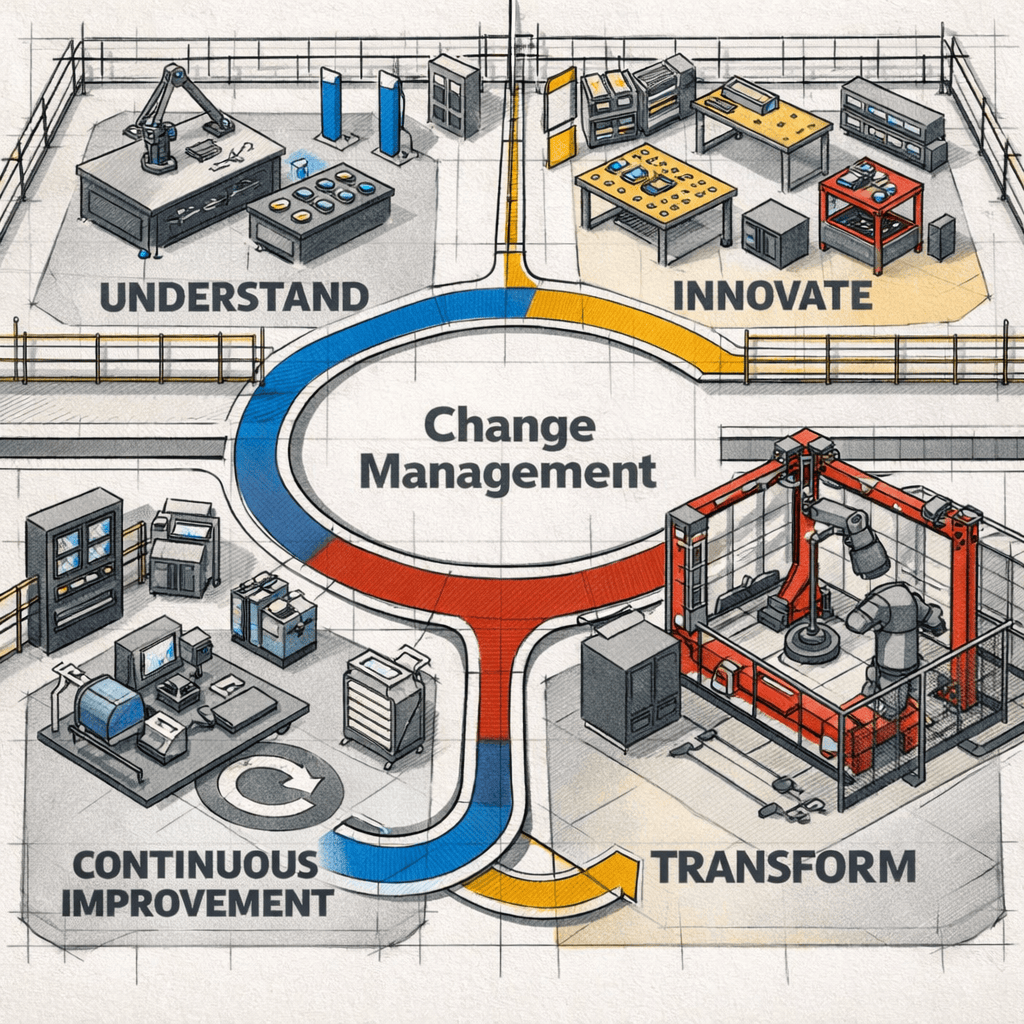
Definition and Scope
Lifecycle Management is the structured oversight of assets, processes, and services throughout their operational lifespan. It ensures consistent value delivery through planned phases such as initiation, deployment, optimisation, and retirement, aligning with strategic and operational goals.
The scope includes IT systems, applications, data, infrastructure, and physical assets, while excluding isolated, tactical tasks lacking continuity or oversight. Core components—planning, execution, monitoring, and decommissioning—interact dynamically within business and technology environments, adapting to context-specific needs and maturity levels.
By defining clear boundaries and responsibilities, Lifecycle Management enables organisations to maximise resource efficiency, reduce risk, and maintain alignment with changing demands and priorities.
Why Lifecycle Management Matters
Lifecycle Management is critical to sustaining operational excellence and strategic alignment in dynamic business environments. It enables organisations to optimise the use of assets and services while anticipating change and ensuring continuity. It supports strategic goals by linking lifecycle stages to value creation, allowing companies to adapt to technological advances, regulatory demands, and evolving customer expectations. Executives gain visibility for investment planning, managers reduce inefficiencies, and users benefit from seamless experiences.
- Asset Optimisation: Informs renewal or retirement decisions based on performance.
- Process Agility: Enables fast adaptation to market shifts through structured updates.
- Innovation Support: Facilitates experimentation with minimal disruption.
Lifecycle Management empowers better decisions, enhances control, and improves resilience, making it essential for long-term performance and growth.
Business Case and Strategic Justification
Investing in Lifecycle Management supports enterprise-wide optimisation, aligning asset and service usage with strategic objectives. It addresses inefficiencies, fragmented oversight, and unmanaged risk while enabling cost-effective, value-driven decision-making. By integrating lifecycle planning into organisational strategy, it ensures proactive management of resources, readiness for change, and continuity of service. ROI is realised through reduced total cost of ownership, improved asset performance, and measurable efficiency gains across departments.
Typical benefits of Lifecycle Management include:
- Cost Efficiency: Reduces waste and duplication through planned resource use.
- Risk Reduction: Minimises operational and compliance risks via structured oversight.
- Strategic Alignment: Ensures investments support business goals and priorities.
- Operational Visibility: Enables data-driven decisions through real-time tracking.
- Sustainability Enablement: Supports responsible disposal and renewal practices.
Lifecycle Management provides measurable business value and strategic clarity, making it a foundational enabler of growth, resilience, and transformation.
DON’T REINVENT THE WHEEL!
Get access to our Enterprise Standards to Drive Performance, Minimise Cost and Maximise Value.
How is Lifecycle Management Used?
Lifecycle Management is applied through an integrated framework combining structured stages, awareness of failure patterns, and adoption of proven practices. This three-part perspective ensures both operational rigour and adaptability.
- The Key Phases and Process Steps subsection outlines the sequential stages of planning, execution, monitoring, and retirement.
- Identifying Pitfalls and Challenges highlights typical breakdowns that undermine effectiveness.
- Learning from Outperformers presents leading practices that drive consistency, innovation, and value realisation.
Together, these views form a complete guide to applying Lifecycle Management effectively. They help organisations balance discipline with flexibility, avoid common missteps, and build on what works best in real-world settings.
Key Phases and Process Steps
The Lifecycle Management process follows a structured, ten-phase approach that ensures assets, systems, and services are effectively governed from inception to retirement. Each phase plays a distinct role in maintaining value, compliance, and alignment with business needs.
1. Initiation
Define purpose, scope, and value of the asset or service.
2. Assessment
Analyse current state, risks, and performance gaps.
3. Planning
Develop strategy, timelines, and resource allocation.
4. Design
Specify technical, functional, and operational requirements.
5. Procurement
Source and acquire solutions or services.
6. Deployment
Implement and integrate into the operational environment.
7. Operation
Manage day-to-day use, performance, and user support.
8. Monitoring
Track KPIs, compliance, and lifecycle indicators.
9. Optimisation
Apply improvements and cost-control measures.
10. Retirement
Decommission and replace or phase out responsibly.
This sequence ensures continuity, reduces waste, and helps maximise lifecycle value across all enterprise assets and services.
Identifying Pitfalls and Challenges: Antipatterns and Worst Practices
Poorly executed Lifecycle Management often results from recurring antipatterns and entrenched worst practices. These issues hinder efficiency, reduce asset value, and create risk across enterprise environments.
5 Antipattern Examples:
5 Worst Practice Examples:
Avoiding these patterns ensures more stable, scalable, and value-driven Lifecycle Management implementation.
Learning from Outperformers: Best Practices and Leading Practices
Organisations that excel in Lifecycle Management follow proven best practices and evolve them into leading practices. These approaches enable consistency, scalability, and value creation across the full lifecycle.
5 Best Practice Examples:
5 Leading Practice Examples:
These practices help organisations maximise asset value, reduce waste, and build adaptive, future-ready operations.
Who is Typically Involved with Lifecycle Management?
Effective Lifecycle Management relies on clear roles and collaboration across functions. Understanding stakeholder responsibilities ensures accountability, efficiency, and aligned execution.
Key roles typically include:
- Executive Sponsor: Sets direction, secures funding, and ensures alignment with strategy.
- Lifecycle Manager: Oversees phases, coordinates teams, and tracks progress.
- Project Lead: Manages timelines, milestones, and cross-team coordination.
- Operations Manager: Handles daily performance, maintenance, and incident response.
- Technical Owner: Ensures system integrity, updates, and compliance.
Stakeholder impacts include:
- Executives: Gain transparency for investment decisions.
- Managers: Streamline operations and reduce risk.
- End Users: Experience fewer disruptions and more reliable services.
Defining roles helps reduce gaps, align efforts, and support successful lifecycle execution across the organisation.
Where is Lifecycle Management Applied?
Lifecycle Management is applied across diverse organisational domains to ensure assets, services, and processes remain aligned with business objectives. Its principles support operational consistency, cost control, and strategic agility.
Key domains include:
- IT: Manages system upgrades, security, and decommissioning.
- Finance: Tracks asset depreciation and replacement planning.
- Operations: Oversees physical assets and infrastructure lifecycles.
- HR: Guides onboarding tools, training platforms, and workspace assets.
- Customer Service: Maintains support systems and digital service tools.
Understood. Here’s the revised formatting for the “Illustrative scenarios” section using your specified style:
Illustrative scenarios:
- A product team phases out outdated platforms while transitioning to new technologies.
- An IT department streamlines license renewals and upgrade cycles using lifecycle planning.
This versatility makes Lifecycle Management a foundational discipline across functions, enabling better control and long-term resource planning.
When Should You Embrace Lifecycle Management?
Recognising the right moment to implement Lifecycle Management is essential to ensuring readiness, impact, and long-term success. Timing, organisational maturity, and stakeholder alignment all influence its effectiveness.
- Growth Expansion: New markets or teams require scalable, standardised processes.
- Technology Refresh: System upgrades demand structured planning and phasing.
- Cost Pressure: Efficiency needs trigger lifecycle cost control.
- Regulatory Change: New compliance demands require traceability and oversight.
- Process Modernisation: Shifting from manual to digital workflows needs structured governance.
Prerequisites include:
- Executive Sponsorship: Clear leadership support and strategic backing.
- Cross-Functional Buy-In: Alignment across departments to ensure collaboration.
- Data Transparency: Access to reliable lifecycle-related information.
- Mature Process Baselines: Established workflows ready for structured optimisation.
Monitoring these conditions ensures that Lifecycle Management is launched with clarity and purpose, increasing its value and adoption across the enterprise.
Most Common Lifecycle Management Artefacts
Artefacts play a critical role in structuring and guiding effective Lifecycle Management. They provide visibility, control, and traceability across each phase of the lifecycle.
- Lifecycle Plan: Defines the strategy, phases, timelines, and responsibilities for managing an asset or service.
- Asset Register: Centralised inventory tracking usage, status, and lifecycle stage of each item.
- Change Log: Documents all lifecycle-related modifications, decisions, and version history.
- Performance Dashboard: Visualises key metrics and compliance indicators in real time.
- Retirement Checklist: Ensures structured decommissioning, data handling, and resource transition.
These artefacts enable consistency, informed decision-making, and accountability—making them essential tools for executing and sustaining Lifecycle Management.
The Artefacts Table
The following table outlines five key artefacts used in Lifecycle Management. Each artefact plays a vital role in structuring and supporting the full asset or service lifecycle within an organisation.
| Artefact | Description | Practical use |
|---|---|---|
| Lifecycle Plan | Outlines the stages, timeline, and responsibilities for managing the asset lifecycle. | Used by managers to coordinate activities across departments and ensure consistent execution. |
| Asset Register | Tracks status, usage, and lifecycle stage of enterprise assets. | Maintained by operations teams for inventory control, audits, and planning decisions. |
| Change Log | Captures all updates, decisions, and changes made to the asset over time. | Reviewed during governance sessions to assess change impact and maintain transparency. |
| Performance Dashboard | Displays lifecycle metrics, KPIs, and compliance indicators. | Used by leadership for real-time performance monitoring and decision-making. |
| Retirement Checklist | Details structured steps for decommissioning and asset disposal. | Applied by IT or operations to ensure secure, compliant end-of-life management. |
These artefacts ensure coordinated planning, reduce risk, and support continuous optimisation—making them foundational to effective Lifecycle Management.