
Enterprise Engineering
Information & Systems Engineering
Reference Content ID: #LEAD-ES30018BCSAD
Introduction to Information & Systems Engineering
Information & Systems Engineering integrates information management with systems thinking to optimise enterprise processes, technologies, and data flows. It focuses on designing, analysing, and implementing systems that align information structures with business objectives.
This discipline encompasses areas such as architecture modelling, data integration, process automation, and IT infrastructure. Applicable across all sectors, it supports organisations by improving decision-making, enhancing interoperability, and reducing complexity.
Whether on-site, hybrid, or remote, it enables seamless collaboration and digital workflows that improve productivity and employee well-being. By embedding Information & Systems Engineering, enterprises foster agility, alignment, and resilience in an increasingly digital and interconnected world.
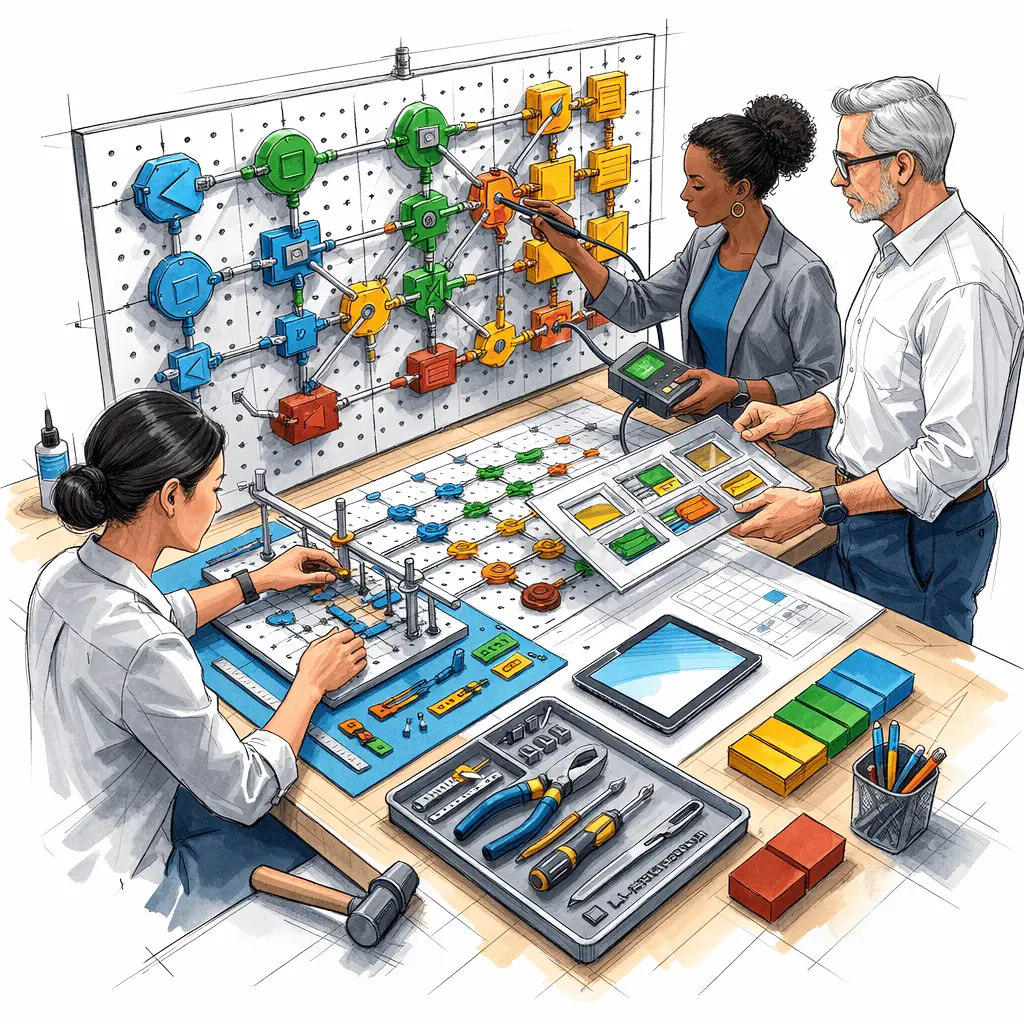
Definition and Scope
Information & Systems Engineering is a discipline that integrates information structures with system design to align business objectives, processes, and technologies. It focuses on creating scalable, interoperable systems that enhance operational efficiency and support enterprise-wide decision-making.
Core components include data architecture, systems integration, process engineering, and IT infrastructure design. These elements interact through standardised models and frameworks, enabling consistency across departments and technologies.
While it addresses enterprise-level system complexity and information flows, it does not extend to purely tactical IT support or isolated application development. This discipline ensures coherence between business goals and technical execution, fostering agility and strategic alignment across diverse enterprise environments.
Why Information & Systems Engineering Matters
Information & Systems Engineering is essential for aligning enterprise operations with strategic goals in a fast-evolving digital landscape. It provides the structural foundation to adapt to change, optimise processes, and integrate technologies across business units.
Organisations face complexity, siloed information, and fragmented systems. This discipline addresses these challenges by ensuring data consistency, system interoperability, and process clarity. Executives gain better insights, managers coordinate workflows efficiently, and employees benefit from streamlined tools.
- Informed Decision-Making: Executives access real-time, cross-functional data that supports strategic planning, risk management, and performance tracking across the enterprise.
- Operational Efficiency: Managers streamline resource allocation and service delivery through integrated systems, standardised workflows, and automated reporting mechanisms.
- Innovation Enablement: IT teams develop scalable platforms for digital transformation, enabling agile delivery, faster prototyping, and enterprise-wide technology integration.
As a cross-cutting enabler, Information & Systems Engineering fosters agility, reduces risk, and strengthens enterprise resilience. Its relevance spans industries and functions, supporting both strategic direction and daily operations.
Business Case and Strategic Justification
Organisations increasingly rely on Information & Systems Engineering to drive enterprise-wide transformation, manage complexity, and ensure strategic coherence. It aligns systems, data, and processes with business goals, making it a foundational enabler of agility, efficiency, and innovation.
Investing in this discipline leads to measurable returns through reduced redundancy, faster decision cycles, and scalable system designs. It addresses legacy system constraints, fragmented information, and inconsistent operations—delivering long-term value across functions.
Typical benefits include:
- Strategic Alignment: Ensures systems and processes directly support business goals.
- Cost Reduction: Minimises duplication and inefficiencies in IT and operations.
- Faster Time-to-Value: Accelerates delivery of new capabilities and services.
- Improved Compliance: Enhances governance through standardised processes.
- Data-Driven Insights: Enables access to reliable, real-time business information.
Information & Systems Engineering strengthens organisational adaptability and competitiveness. Its adoption supports both immediate efficiency gains and long-term strategic positioning.
DON’T REINVENT THE WHEEL!
Get access to our Enterprise Standards to Drive Performance, Minimise Cost and Maximise Value.
How is Information & Systems Engineering Used?
Information & Systems Engineering is applied through a structured framework that integrates planning, execution, and continuous improvement. It enables organisations to design, deploy, and optimise systems in alignment with enterprise goals.
The framework includes three key perspectives:
- Key Phases and Process Steps outlines the end-to-end lifecycle of implementation.
- Identifying Pitfalls and Challenges helps avoid common missteps that compromise performance.
- Learning from Outperformers captures proven approaches and leading practices.
Together, these lenses provide a comprehensive path from strategy to execution. They support consistent, scalable, and value-driven outcomes across different organisational and technological contexts.
Key Phases and Process Steps
The application of Information & Systems Engineering follows a clear, structured progression designed to ensure alignment, integration, and impact. This ten-step approach enables organisations to navigate complexity while delivering business value through engineered systems.
1. Needs Assessment
Identify business drivers, pain points, and system gaps.
2. Stakeholder Engagement
Involve key roles to capture priorities and constraints.
3. Requirements Definition
Translate needs into formalised functional and technical requirements.
4. Architecture Design
Develop structural models for data, processes, and systems.
5. Solution Planning
Outline implementation scope, timelines, and resources.
6. Integration Design
Ensure interoperability across existing and new components.
7. Implementation
Execute development, configuration, and deployment.
8. Testing & Validation
Confirm system performance, accuracy, and reliability.
9. Change Enablement
Support user adoption through training and communication.
10. Performance Optimisation
Continuously monitor and improve outcomes.
This sequence ensures coherence from concept to execution, supporting enterprise-wide transformation and operational excellence.
Identifying Pitfalls and Challenges: Antipatterns and Worst Practices
Despite its value, Information & Systems Engineering can fall short when misapplied. Recognising antipatterns and worst practices helps organisations avoid wasted effort, misalignment, and technical debt.
5 Antipattern Examples:
5 Worst Practice Examples:
Avoiding these patterns supports sustainable, business-aligned engineering outcomes.
Learning from Outperformers: Best Practices and Leading Practices
Organisations that excel in Information & Systems Engineering apply structured best practices and evolve them into leading practices for greater impact. These approaches ensure scalability, agility, and business alignment.
5 Best Practice Examples:
5 Leading Practice Examples:
These practices help transform engineering from tactical execution into strategic value creation.
Who is Typically Involved with Information & Systems Engineering?
Successful Information & Systems Engineering depends on clear roles and collaboration across stakeholder groups. Understanding who is involved ensures alignment, accountability, and efficient delivery.
Typical roles include:
- Executive Sponsor: Provides funding, strategic alignment, and executive support.
- Enterprise Architect: Designs system frameworks and ensures integration.
- Project Manager: Coordinates planning, resources, and delivery timelines.
- Business Analyst: Captures requirements and translates business needs.
- IT Operations Lead: Oversees implementation, testing, and support.
Key stakeholder benefits include:
- Executive Oversight: Executives gain system transparency for strategic planning, risk assessment, and performance measurement across the enterprise.
- Managerial Decision-Making: Managers use improved workflows and unified systems to make timely, data-driven decisions and coordinate operational activities more effectively.
- Technical Enablement: Technical teams leverage standardisation and shared models to streamline system development, integration, and long-term maintenance.
Defined roles and shared ownership enable smoother execution, stronger governance, and more impactful results.
Where is Information & Systems Engineering Applied?
Information & Systems Engineering is applied across diverse functions to optimise systems, streamline operations, and ensure data consistency. Its versatility allows it to address both enterprise-wide initiatives and targeted improvements.
Common domains include:
- IT & Infrastructure: Supports integration, scalability, and system performance.
- Finance: Enables accurate, real-time reporting and compliance alignment.
- Operations: Improves process flow, resource planning, and efficiency.
- Human Resources: Aligns systems for workforce data, onboarding, and engagement.
- Customer Service: Integrates platforms for faster resolution and improved experience.
Illustrative scenarios:
- Manufacturing Workflow Redesign: A manufacturing team uses system models to analyse and restructure production workflows, improving throughput, reducing delays, and aligning system logic with operational goals.
- Financial System Integration: A finance project connects ERP and BI tools to enable unified data reporting, enhancing visibility, speeding up analysis, and ensuring compliance across financial functions.
These applications show the broad relevance of Information & Systems Engineering in enabling coordinated, data-driven, and scalable solutions.
When Should You Embrace Information & Systems Engineering?
The success of Information & Systems Engineering depends on recognising the right moment to initiate it. Timing and readiness ensure alignment with strategic priorities and available capacity.
Key scenarios include:
- Rapid Growth: Scaling operations requires system integration and standardisation.
- Digital Transformation: Modernising infrastructure calls for cohesive system design.
- Mergers & Acquisitions: Aligning systems and data across entities is critical.
- Technology Refresh: Replacing legacy systems demands coordinated engineering.
- Regulatory Changes: New compliance needs trigger system updates and alignment.
Prerequisites:
- Executive Sponsorship: Senior leadership backing to ensure funding and strategic alignment.
- Cross-Functional Buy-In: Engagement from key departments to support collaboration and adoption.
- Process Maturity: Established and repeatable processes ready for optimisation and integration.
- Sufficient Resources: Availability of skilled personnel, budget, and technology capacity.
Recognising these signals ensures the organisation is equipped to maximise value from Information & Systems Engineering. Strategic timing supports smoother implementation and stronger long-term outcomes.
Most Common Information & Systems Engineering Artefacts
Artefacts play a central role in Information & Systems Engineering by translating complexity into structured, actionable documentation. They enable alignment between business and IT, supporting clarity, consistency, and execution across initiatives.
- System Architecture Blueprint: Illustrates the structure, components, and interactions of enterprise systems.
- Requirements Specification: Documents functional, technical, and integration needs for solution development.
- Process Flow Diagram: Maps workflows and decision points to support system and process design.
- Data Entity Model: Defines key data elements, structures, and relationships across systems.
- Integration Map: Details interfaces and data exchanges between internal and external systems.
These artefacts provide a shared foundation for stakeholders, ensuring coherence, traceability, and successful delivery of engineered solutions.
The Artefacts Table
The following table summarises the key artefacts used in Information & Systems Engineering. Each artefact plays a specific role in aligning systems with business objectives and supporting consistent delivery across projects.
| Artefact | Description | Practical use |
|---|---|---|
| System Architecture Blueprint | High-level visual of systems, components, and integrations. | Used to align IT and business teams during design and review stages. |
| Requirements Specification | Document detailing functional and technical needs. | Used to guide development, procurement, and validation activities. |
| Process Flow Diagram | Visual map of workflows and decision paths. | Used in workshops to optimise business processes and define system behaviour. |
| Data Entity Model | Defines structure and relationships between data elements. | Used by data architects and analysts to enforce consistency and governance. |
| Integration Map | Overview of data exchange points across systems. | Used during implementation to ensure seamless system interoperability. |
These artefacts offer a practical foundation for delivering structured, scalable, and business-aligned systems. They support clarity, traceability, and collaboration across engineering activities.