
Enterprise Engineering
Enterprise Semantics
Reference Content ID: #LEAD-ES30012AS
Introduction to Enterprise Semantics
Enterprise Semantics provides a structured language and shared understanding of core business concepts, processes, and data across an organisation. It aligns strategic intent with operational execution by standardising terminology, relationships, and meaning within and between business units.
Focus areas include semantic modelling, ontology frameworks, data classification, and business glossary development, all geared towards improving communication and interoperability.
Applicable across industries, Enterprise Semantics supports digital workflows, enhances collaboration, and reduces misinterpretation—whether teams work on-site, remotely, or in hybrid models. It fosters productivity and well-being by ensuring that everyone works from a common understanding.
By bridging gaps in language, process, and technology, Enterprise Semantics becomes an enabler of agility and coherence in complex enterprise environments.
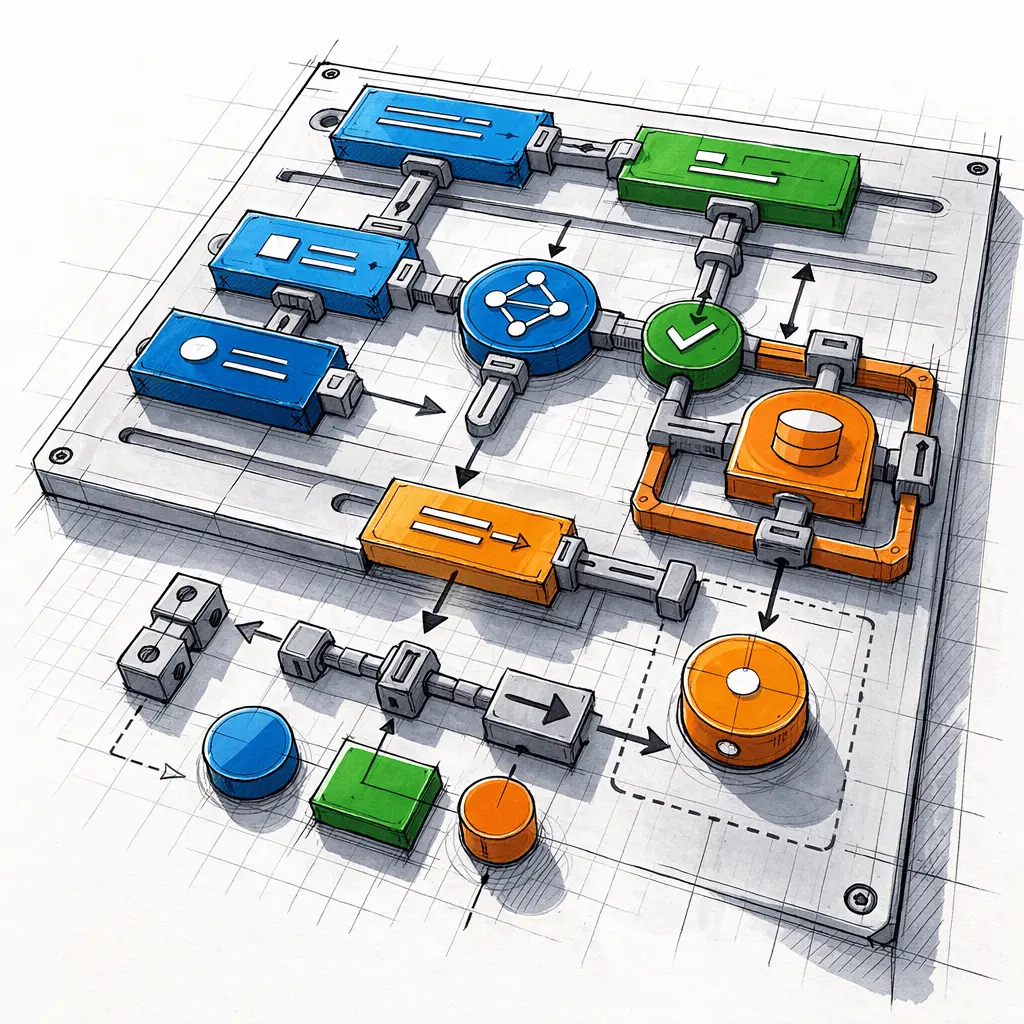
Definition and Scope
Enterprise Semantics refers to the structured representation and governance of meaning across business concepts, terms, and data. It establishes a consistent vocabulary that aligns stakeholders, systems, and processes around shared definitions and interpretations.
Core elements include semantic models, taxonomies, ontologies, controlled vocabularies, and business glossaries. These components enable interoperability across applications, clarity in communication, and data-driven decision-making. While it encompasses both human and machine-readable semantics, it excludes system-specific data syntax or unstructured linguistic analysis.
Enterprise Semantics creates a unified language layer, improving alignment across business units and digital platforms. It ensures consistent meaning, especially critical in data-rich, cross-functional, and distributed enterprise environments.
Why Enterprise Semantics Matters
Enterprise Semantics is critical for organisations seeking clarity, speed, and consistency in an increasingly data-driven, digital environment. It enables alignment between strategy and execution by standardising meaning across systems, processes, and roles. This shared understanding is key to adapting quickly to change and scaling operations efficiently.
Executives, managers, and employees benefit from consistent terminology that eliminates ambiguity and accelerates collaboration. Enterprise Semantics enhances reporting accuracy, simplifies compliance, and supports innovation.
- Faster Decision Cycles: Leaders access clearly defined, comparable data for real-time decisions.
- Process Efficiency: Operational teams reduce errors caused by semantic misalignment.
- Innovation Enablement: Product teams build smarter solutions based on standardised, interoperable concepts.
By connecting language, logic, and data, Enterprise Semantics strengthens agility, transparency, and enterprise-wide trust in information.
Business Case and Strategic Justification
Enterprise Semantics supports the strategic need for coherence, speed, and consistency in data-rich environments. It aligns language and meaning across business functions, enabling smoother integration, automation, and digital transformation. This capability directly supports corporate goals such as operational efficiency, regulatory compliance, and customer-centric innovation.
Investments in Enterprise Semantics yield measurable returns through reduced rework, improved data quality, and accelerated time-to-value. Efficiency gains, lower integration costs, and faster project cycles contribute to a strong ROI.
Typical benefits of Enterprise Semantics include:
- Improved Decision-Making: Enables reliable, comparable data across units.
- Operational Efficiency: Minimises duplication and rework from unclear terminology.
- Compliance Assurance: Ensures consistency in regulatory and audit reporting.
- Faster Integration: Speeds system alignment during M&A or platform shifts.
- Scalable Innovation: Supports agile solution development using reusable semantics.
Enterprise Semantics delivers strategic and operational impact, making it a foundational enabler of enterprise agility and digital readiness.
DON’T REINVENT THE WHEEL!
Get access to our Enterprise Standards to Drive Performance, Minimise Cost and Maximise Value.
How is Enterprise Semantics Used?
Enterprise Semantics is applied through an integrated framework combining structured process stages, awareness of common pitfalls, and the adoption of proven practices. Together, these perspectives ensure consistent, scalable, and value-driven implementation across the enterprise.
- The Key Phases and Process Steps outline the typical journey from discovery and modelling to validation and deployment.
- The Identifying Pitfalls and Challenges section highlights frequent missteps and how to avoid them.
- The Learning from Outperformers section showcases leading practices and proven patterns that deliver results.
This structure offers organisations a clear roadmap to apply Enterprise Semantics effectively. By aligning process discipline with lessons learned and practical excellence, the framework supports robust and adaptable semantic capabilities.
Key Phases and Process Steps
The implementation of Enterprise Semantics follows a structured ten-step process that ensures clarity, consistency, and alignment across business and IT. Each phase builds on the last to create a coherent semantic foundation adaptable to enterprise needs.
1. Initiation & Scoping
Define goals, scope, and stakeholders for semantic alignment.
2. Discovery & Analysis
Identify key terms, concepts, and data entities used across the organisation.
3. Modelling & Structuring
Create semantic models, taxonomies, and ontologies based on findings.
4. Validation & Governance
Align models with stakeholder understanding and needs.
5. Standardisation & Harmonisation
Align terminologies and resolve overlaps or inconsistencies.
6. Tool Selection & Setup
Choose platforms to manage and maintain semantic artefacts.
7. Integration & Mapping
Link semantics to business processes, systems, and data layers.
8. Training & Adoption
Educate users and embed semantics into daily operations.
9. Monitoring & Maintenance
Continuously validate and update semantic assets.
10. Scaling & Optimisation
Extend use across domains and refine for performance and reuse.
This stepwise approach supports systematic implementation while allowing flexibility. It ensures that Enterprise Semantics delivers lasting value and alignment.
Identifying Pitfalls and Challenges: Antipatterns and Worst Practices
Poor execution of Enterprise Semantics often stems from misunderstood objectives or fragmented approaches. Recognising common antipatterns and worst practices helps organisations prevent failure and realise intended value.
5 Antipattern Examples:
5 Worst Practice Examples:
Avoiding these pitfalls helps establish scalable, maintainable, and impactful semantic practices.
Learning from Outperformers: Best Practices and Leading Practices
Organisations that excel with Enterprise Semantics apply structured, business-driven approaches supported by governance and adoption strategies. Their success reveals best and leading practices that others can follow.
5 Best Practice Examples:
5 Leading Practice Examples:
Applying these practices helps ensure semantic consistency, agility, and enterprise-wide value creation.
Who is Typically Involved with Enterprise Semantics?
Successful Enterprise Semantics relies on clearly defined roles and effective collaboration across stakeholder groups. Understanding who is involved ensures accountability, alignment, and sustained value creation.
The key roles include:
- Executive Sponsor: Secures funding and strategic alignment.
- Semantic Architect: Designs models, taxonomies, and ontologies.
- Project Lead: Manages timelines, resources, and stakeholder input.
- Data Steward: Maintains semantic assets and ensures quality.
- Business Analyst: Bridges business needs and semantic design.
Stakeholders benefit in specific ways:
- Executives: Gain reliable data for strategic decisions.
- Managers: Coordinate teams around consistent definitions.
- Technical Teams: Integrate semantics into digital workflows.
Clear ownership and cross-role collaboration ensure that Enterprise Semantics is scalable, governed, and adopted enterprise-wide.
Where is Enterprise Semantics Applied?
Enterprise Semantics is applied across a wide range of functions to unify language, standardise meaning, and enable interoperability. It supports both strategic initiatives and day-to-day operations across the enterprise.
Common domains include:
- Finance: Ensures consistency in reporting and regulatory alignment.
- IT & Data Management: Connects data models and enhances system integration.
- Operations: Aligns processes with shared terminology and KPIs.
- Customer Service: Unifies knowledge bases and improves response accuracy.
- Product Development: Enables cross-team collaboration using shared definitions.
Illustrative use cases include:
- ERP Integration Projects: Harmonising terms across legacy systems.
- AI Deployment: Feeding machine learning models with semantically consistent data.
The broad applicability of Enterprise Semantics makes it a key enabler of organisational efficiency, accuracy, and scalability.
When Should You Embrace Enterprise Semantics?
Timing is critical to successful Enterprise Semantics adoption. Certain organisational moments and readiness conditions help maximise impact and long-term value.
Key triggers include:
- Digital Transformation: Requires semantic consistency across platforms.
- Rapid Growth: Demands scalable communication and data clarity.
- M&A Activity: Needs harmonisation of language and systems.
- System Modernisation: Supports integration and migration efforts.
- Regulatory Pressure: Ensures aligned definitions and reporting accuracy.
Prerequisites for successfully adopting Enterprise Semantics include:
- Stakeholder Alignment: Clear commitment and shared understanding across business and IT leaders.
- Available Expertise: Access to semantic architects, data stewards, and subject matter experts.
- Strong Governance: Defined ownership, standards, and decision-making structures.
- Established Process Maturity: Stable and well-understood business processes to anchor semantic models.
- Tooling & Infrastructure Readiness: Availability of platforms to manage, maintain, and scale semantic assets.
Recognising the right moment and preparing properly ensures that Enterprise Semantics delivers meaningful outcomes. It reduces risks, accelerates value, and embeds consistency from the start.
Most Common Enterprise Semantics Artefacts
Enterprise Semantics relies on well-defined artefacts to structure meaning, ensure consistency, and support implementation across systems and teams. These tools enable practical use, governance, and reuse of semantic assets.
Common artefacts include:
- Business Glossary: A shared repository of approved terms and definitions.
- Semantic Data Model: Visualises relationships between key concepts, entities, and attributes.
- Ontology: A formal representation of concepts and their interconnections.
- Taxonomy: A hierarchical structure to categorise terms and concepts.
- Semantic Mapping Matrix: Links business terms with data fields and system elements.
These artefacts anchor semantic practices in daily operations and strategic initiatives. They provide clarity, drive integration, and promote reuse across functions and platforms.
The Artefacts Table
The following table outlines the most common artefacts used in Enterprise Semantics, each serving a distinct function in defining, organising, and operationalising meaning. These tools help ensure that semantic assets are consistently applied across business and IT environments.
| Artefact | Description | Practical use |
|---|---|---|
| Business Glossary | Central list of approved business terms and definitions. | Used to align departments around shared language in documentation and reporting. |
| Semantic Data Model | Diagram of relationships between key business concepts and data. | Applied during system design or integration to ensure data consistency. |
| Ontology | Formal structure defining concepts and their interrelations. | Used in knowledge management and AI to support inference and classification. |
| Taxonomy | Hierarchical categorisation of terms and concepts. | Applied in content tagging, document classification, and search optimisation. |
| Semantic Mapping Matrix | Cross-reference of business terms with system and data elements. | Used in data migration and system integration projects. |
These artefacts provide structure and clarity, enabling organisations to embed semantic principles into daily work. They support alignment, reduce ambiguity, and enhance interoperability across diverse business environments.