
Enterprise Engineering
Artefacts & Templates
Reference Content ID: #LEAD-ES30016ALL
Introduction to Artefacts & Templates
Artefacts & Templates are structured content elements that standardize how knowledge, methods, and solutions are created, shared, and reused across an organization. They provide predefined formats for strategy, operations, and transformation activities, helping teams align efforts and accelerate outcomes.
From decision frameworks to workflow models, these tools support consistent execution. They are essential in driving productivity, promoting collaboration, and enabling digital workflows across on-site, hybrid, and remote work environments.
By simplifying complex processes, they also reduce cognitive load and support employee well-being. Artefacts & Templates are critical enablers of efficiency, clarity, and consistency—empowering organizations to scale knowledge and performance.
Definition and Scope
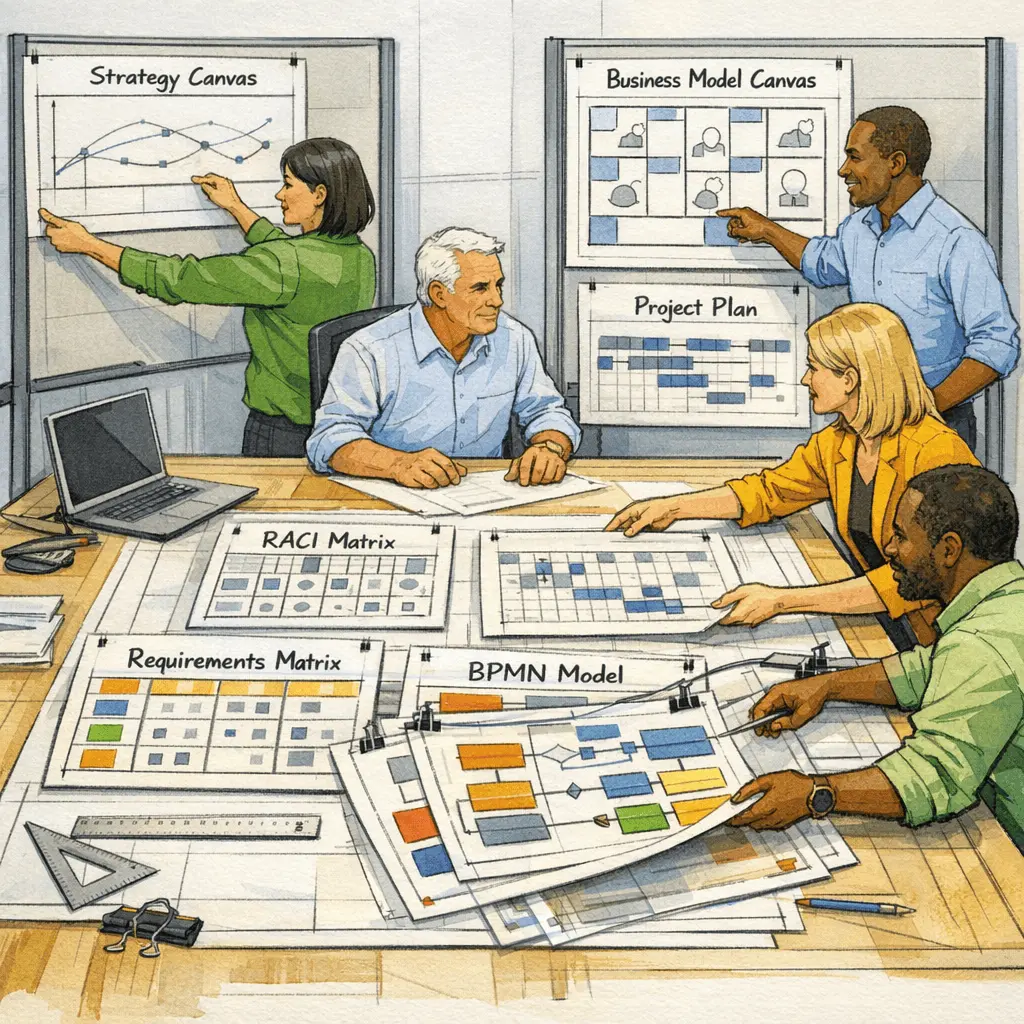
Artefacts & Templates are reusable, structured formats that guide the creation, documentation, and execution of business strategies, operations, and transformations. They serve as foundational tools for capturing knowledge, aligning teams, and ensuring consistency across diverse enterprise environments.
Their scope includes business models, process maps, capability frameworks, governance structures, and planning documents. While they support standardisation and clarity, they do not replace strategic thinking or bespoke solution design. Instead, they provide a structured starting point adaptable to various industries and functions.
Artefacts & Templates operate as scalable knowledge assets that bring clarity and alignment to complex environments. They are most effective when tailored to specific organizational needs.
Why Artefacts & Templates Matters
Artefacts & Templates are critical tools for aligning strategic intent with operational execution. They enable organisations to respond swiftly to change, reduce complexity, and ensure consistency across teams and functions. By codifying best practices, they support scalable, repeatable success.
They help address challenges such as fragmented communication, slow decision-making, and duplicated efforts. Executives, managers, and frontline users benefit in different ways:
- Executives: Gain visibility and alignment through standardized strategy templates that support enterprise-level planning and governance.
- Managers: Accelerate planning with reusable project artefacts that streamline execution and improve reporting consistency.
- End Users: Improve task clarity using predefined workflows that simplify day-to-day activities and reduce ambiguity.
Artefacts & Templates play a vital role in driving agility, innovation, and operational excellence. They support informed decision-making and create a shared language across the organisation.
Business Case and Strategic Justification
Artefacts & Templates provide a structured approach to managing complexity, enabling faster decision-making and operational clarity. They align directly with corporate goals such as digital transformation, risk reduction, and productivity enhancement.
By standardising content creation and process execution, organisations reduce rework, improve time-to-market, and ensure consistent delivery across units. The return on investment is seen in cost savings, increased reuse, and improved employee effectiveness.
Key benefits include:
- Faster Execution: Enables quicker project starts with ready-to-use content.
- Cost Efficiency: Reduces duplication and accelerates delivery with reusable formats.
- Quality Control: Ensures compliance and consistency across teams.
- Strategic Alignment: Connects initiatives to enterprise goals.
- Scalable Knowledge: Captures and shares organisational know-how.
Artefacts & Templates justify their value through measurable performance gains and reduced delivery risk. Investing in their development and governance supports long-term strategic execution.
DON’T REINVENT THE WHEEL!
Get access to our Enterprise Standards to Drive Performance, Minimise Cost and Maximise Value.
How are Artefacts & Templates Used?
Artefacts & Templates are applied through a structured lens that balances process discipline with adaptability. Their effective use is guided by understanding key implementation stages, avoiding known pitfalls, and adopting proven best practices.
- The Key Phases & Process Steps define how artefacts and templates are created, governed, and reused.
- Identifying Pitfalls & Challenges helps organisations avoid inefficiencies, such as over-engineering or misalignment.
- Learning from Outperformers highlights how leading organisations maximise value through smart design and scalable use.
Together, these perspectives provide a practical guide for integrating Artefacts & Templates into everyday operations. They enable a consistent, value-driven approach adaptable to any organisation’s needs.
Key Phases and Process Steps
The use of Artefacts & Templates follows a structured ten-step approach designed to ensure consistency, relevance, and organisational value. Each phase plays a specific role in developing, validating, and applying these tools effectively across contexts.
1. Needs Identification
Define business challenges or opportunities requiring structured support.
2. Scope Definition
Establish the artefact or template’s purpose, boundaries, and stakeholders.
3. Design & Structuring
Develop the layout, logic, and data elements for usability.
4. Validation & Alignment
Ensure alignment with governance, stakeholders, and strategic goals.
5. Pilot Application
Test the artefact in real scenarios and refine as needed.
6. Approval & Release
Formalise the artefact or template for broader use.
7. Training & Enablement
Equip users with guidance and best-use instructions.
8. Integration & Use
Embed into workflows, systems, and decision-making processes.
9. Monitoring & Feedback
Capture insights and measure effectiveness.
10. Maintenance & Evolution
Update regularly to retain relevance and impact.
This phased approach ensures that Artefacts & Templates remain purposeful, scalable, and aligned with business goals. Each step reinforces quality, adoption, and strategic utility.
Identifying Pitfalls and Challenges: Antipatterns and Worst Practices
Despite their value, Artefacts & Templates can become ineffective if misused. Recognising common antipatterns and worst practices helps organisations avoid waste, confusion, and resistance.
5 Antipattern Examples:
5 Worst Practice Examples:
Avoiding these pitfalls ensures templates stay relevant, useful, and aligned with enterprise needs. Regular review and user-centric design are key to success.
Learning from Outperformers: Best Practices and Leading Practices
Organisations that excel with Artefacts & Templates apply proven practices that ensure relevance, usability, and impact. These practices are grounded in structured use and continuous refinement.
5 Best Practice Examples:
5 Leading Practice Examples:
These practices enhance adoption, quality, and business alignment—turning templates into strategic enablers.
Who is Typically Involved with Artefacts & Templates?
Effective use of Artefacts & Templates depends on clearly defined roles and coordinated participation. Understanding who is involved ensures accountability and drives successful adoption and use.
Key roles include:
- Executive Sponsor: Sets strategic direction and ensures alignment with goals.
- Content Owner: Maintains artefact relevance and drives updates.
- Project Lead: Oversees integration into projects and tracks adoption.
- Operations Manager: Embeds templates into business-as-usual workflows.
- Enablement Lead: Supports training, documentation, and user readiness.
Different stakeholder groups influence outcomes and gain value:
- Executives: Use artefacts for strategic visibility and alignment across initiatives, enabling better governance and direction.
- Managers: Apply templates to standardise project delivery and reporting, ensuring consistency and reducing delivery risks.
- Teams: Use templates to reduce complexity in day-to-day work, enabling faster execution and clearer task ownership.
Clear roles ensure that Artefacts & Templates remain accurate, usable, and impactful—driving consistency and value across the organisation.
Where is Artefacts & Templates Applied?
Artefacts & Templates are used across a wide range of functions to bring structure, clarity, and speed to business activities. Their versatility makes them applicable in both strategic planning and daily operations.
Common application areas include:
- Finance: Standardises budgeting models and reporting templates.
- IT: Guides architecture design, service management, and deployment.
- Operations: Enables process mapping and SOP documentation.
- HR: Structures onboarding, performance reviews, and talent frameworks.
- Customer Service: Provides scripts, escalation flows, and response templates.
Example scenarios:
- Transformation Team: Uses templates to align strategic initiatives across departments, ensuring consistency and cross-functional integration.
- Service Team: Applies artefacts to streamline issue resolution workflows, reducing response times and improving service quality.
These tools adapt easily to diverse organisational needs, helping teams act with confidence, consistency, and speed.
When Should You Embrace Enterprise Ontology?
The timing of adopting Artefacts & Templates is critical to ensure their relevance, usability, and organisational impact. Recognising key signals and preparing accordingly helps maximise value from the outset.
Ideal moments include:
- Rapid Growth: Standardisation supports scale and consistency.
- Digital Transformation: Templates accelerate system and process alignment.
- Organisational Restructuring: Brings clarity to roles, workflows, and decisions.
- Technology Refresh: Supports onboarding and systems integration.
- Compliance Demands: Ensures repeatable, auditable practices.
Prerequisites:
- Stakeholder Alignment: Clear commitment and shared understanding across leadership and key contributors.
- Available Resources: Dedicated time, skills, and tools to design, implement, and maintain templates.
- Process Maturity: Well-defined and stable processes that can support structured template integration.
Readiness and timing directly affect adoption success. When implemented with the right foundations, Artefacts & Templates become powerful enablers of sustainable change.
Most Common Artefacts & Templates Artefacts
Artefacts & Templates rely on core tools that ensure consistency, usability, and alignment with business needs. These artefacts provide structure for planning, execution, and knowledge sharing.
- Template Library: A central repository of pre-approved, reusable formats for common use cases.
- Checklist Template: Guides users through tasks and quality checks to ensure completeness.
- Workflow Blueprint: Visualises steps, roles, and decision points for process clarity.
- Decision Matrix: Supports structured evaluation of options for faster, transparent decisions.
- Guidance Document: Provides instructions and context for using each artefact effectively.
These artefacts help standardise practice, reduce complexity, and enable faster onboarding. Together, they support a disciplined yet flexible approach to organisational execution.
The Artefacts Table
The table below summarises the most commonly used artefacts in the context of Artefacts & Templates. Each tool plays a specific role in standardising processes, guiding decisions, and improving work efficiency.
| Artefact | Description | Practical Use |
|---|---|---|
| Template Library | A repository of reusable templates for consistent application. | Used by teams to access standard formats for reports, plans, and models. |
| Checklist Template | Step-by-step task guide ensuring completeness and accuracy. | Used in project delivery or compliance reviews to verify all actions are completed. |
| Workflow Blueprint | Visual representation of processes, roles, and decision points. | Used in operations and IT to map and improve service delivery flows. |
| Decision Matrix | Tool for structured evaluation of choices using predefined criteria. | Used in strategy or procurement to assess and prioritise options objectively. |
| Guidance Document | Instructions and context for how to apply artefacts effectively. | Used during onboarding or training to explain template usage and intent. |
These artefacts help embed consistency, accelerate delivery, and improve decision quality across teams. When actively maintained and embedded in workflows, they drive measurable improvements in execution.