
Enterprise Architecture
Circular IT Architecture
Reference Content ID: #LEAD-ES40023ALL
Introduction to Circular IT Architecture
Circular IT Architecture redefines how organisations manage technology by embedding sustainability, reuse, and lifecycle thinking into every stage of IT design and operation. It focuses on modular infrastructure, energy efficiency, and closed-loop lifecycle management—from procurement and usage to refurbishment and recycling.
Applicable across industries, it aligns with digital transformation goals and environmental responsibility. By promoting resource efficiency and seamless integration, Circular IT Architecture enhances team productivity, supports flexible digital workflows, and encourages well-being through smarter, greener tech.
It proves valuable across on-site, hybrid, and remote settings. Circular IT Architecture is both a strategic and operational enabler—balancing innovation with resilience. Its relevance grows as businesses prioritise sustainability and agility.
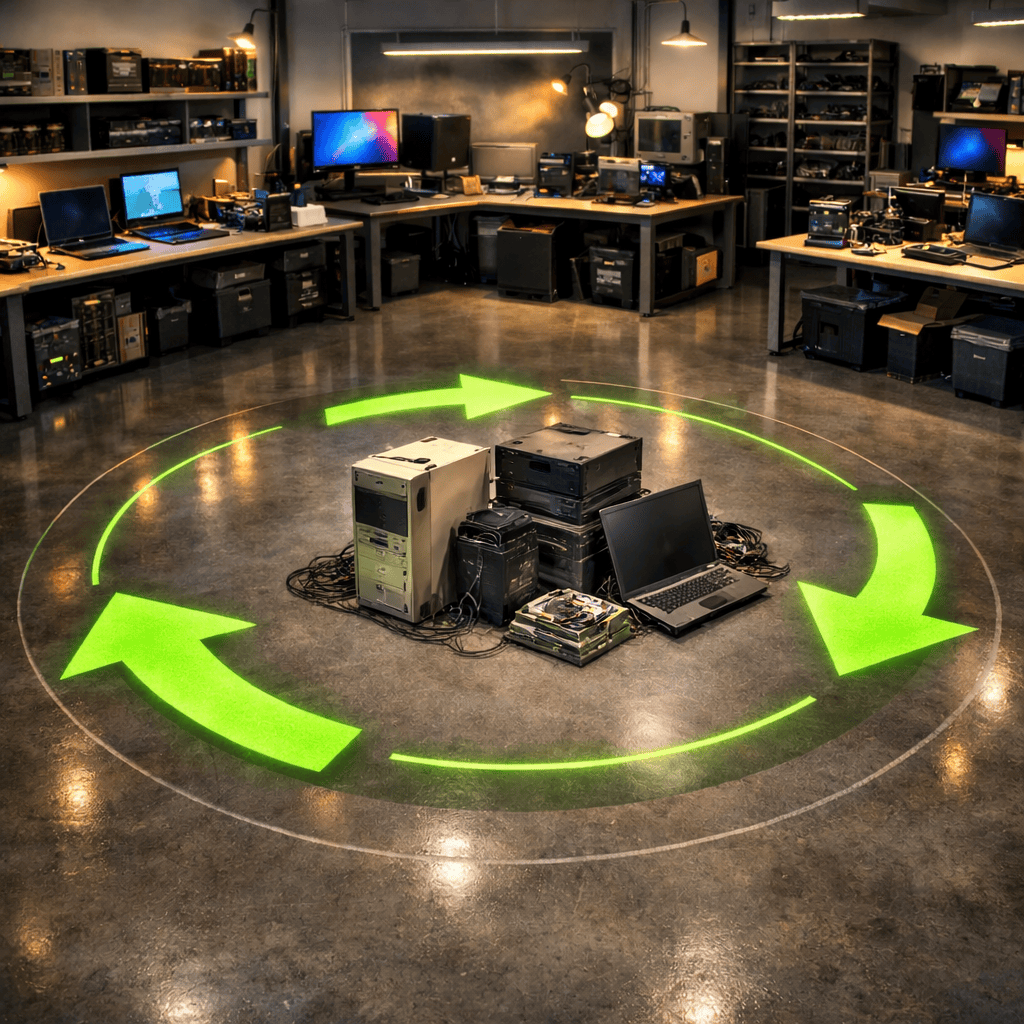
Definition and Scope
Circular IT Architecture is a strategic framework that embeds circular economy principles into IT ecosystems, focusing on sustainability, longevity, and reuse. It extends beyond traditional linear IT models by addressing the full lifecycle of hardware, software, and data infrastructure.
Its scope includes procurement, modular design, shared infrastructure, energy optimisation, asset recovery, and responsible decommissioning. It excludes one-time-use technologies, non-recyclable components, and systems that lack end-of-life planning.
These elements interact across cloud environments, on-premise systems, and hybrid setups to reduce waste and increase efficiency. Circular IT Architecture enables organisations to future-proof their IT landscape while reducing environmental impact. Its structure ensures long-term adaptability and operational resilience.
Why Circular IT Architecture Matters
Circular IT Architecture is increasingly critical as organisations seek sustainable, cost-effective, and agile IT environments. It supports strategic priorities such as digital resilience, ESG compliance, and operational scalability in rapidly evolving markets.
By closing resource loops, it reduces dependency on raw materials, lowers total cost of ownership, and enhances business continuity. Executives value its alignment with ESG goals; managers appreciate streamlined asset use; and end users benefit from more reliable, accessible technologies.
- Informed Procurement: Enables data-driven sourcing decisions based on lifecycle performance.
- Operational Efficiency: Reduces downtime through modular, maintainable systems.
- Sustainable Innovation: Supports experimentation without long-term waste.
Circular IT Architecture transforms IT from a cost centre into a driver of innovation and resilience. Its relevance spans strategic planning and everyday operations.
Business Case and Strategic Justification
Organisations are adopting Circular IT Architecture to align sustainability with profitability while future-proofing their operations. It addresses critical challenges such as rising IT costs, hardware waste, and energy inefficiency—while enabling digital transformation and compliance with ESG goals. The return on investment stems from extended asset lifecycles, reduced procurement costs, lower energy consumption, and improved agility. Metrics such as total cost of ownership (TCO), carbon reduction, and lifecycle utilisation provide tangible justification.
The key benefits include:
- Cost Reduction: Decreases capital and operational expenses through reuse and extended asset life.
- Resilience: Minimises service disruption with modular, easily maintainable systems.
- Sustainability: Reduces environmental impact through efficient resource use.
- Compliance: Supports adherence to environmental and governance regulations.
- Strategic Agility: Enhances flexibility in IT planning and deployment.
Circular IT Architecture offers measurable business value and strategic relevance. Early adoption enables competitive advantage and long-term IT sustainability.
DON’T REINVENT THE WHEEL!
Get access to our Enterprise Standards to Drive Performance, Minimise Cost and Maximise Value.
How is Circular IT Architecture Used?
Applying Circular IT Architecture requires a structured, cross-functional approach that integrates sustainability with operational excellence. A practical framework combines three core lenses to guide implementation across diverse IT landscapes.
- The first lens—Key Phases & Process Steps—details the lifecycle stages from design to disposal, ensuring consistent execution.
- The second—Identifying Pitfalls & Challenges—highlights common breakdowns and misalignments that compromise outcomes.
- The third—Learning from Outperformers—showcases leading practices that drive maturity, innovation, and measurable value.
Together, these perspectives offer a balanced roadmap for adoption, helping organisations navigate complexity and unlock the full potential of Circular IT. They support better decisions, stronger performance, and long-term impact.
Key Phases and Process Steps
Circular IT Architecture follows a ten-phase process that ensures IT resources are responsibly managed from planning through end-of-life. Each step plays a critical role in achieving sustainability, cost-efficiency, and technological agility across the IT lifecycle.
1. Strategic Alignment
Define goals that link IT sustainability to broader business objectives.
2. Requirements Definition
Capture functional, technical, and environmental criteria.
3. Sustainable Procurement
Source modular, repairable, and energy-efficient assets.
4. Design for Circularity
4. Design for Circularity: Architect systems for reuse, upgradeability, and minimal waste.
5. Deployment & Integration
Implement with interoperability and longevity in mind.
6. Usage Optimisation
Monitor usage to maximise performance and lifespan.
7. Maintenance & Support
Conduct timely repairs and updates to extend utility.
8. Redeployment & Reuse
Reassign assets across units to prevent premature disposal.
9. End-of-Life Processing
Recover, refurbish, or recycle responsibly.
10. Performance Evaluation
Measure outcomes using sustainability and efficiency metrics.
This structured approach ensures consistency, accountability, and long-term value throughout Circular IT Architecture initiatives.
Identifying Pitfalls and Challenges: Antipatterns and Worst Practices
While Circular IT Architecture offers clear benefits, many organisations face setbacks due to recurring pitfalls. These often emerge from inconsistent implementation, legacy mindsets, or misaligned incentives.
5 Antipattern Examples:
5 Worst Practice Examples:
Avoiding these traps is essential to unlocking the full value of Circular IT Architecture and ensuring lasting impact.
Learning from Outperformers: Best Practices and Leading Practices
Organisations that excel in Circular IT Architecture adopt practices that embed sustainability across technology, operations, and culture. These outperformers translate principles into measurable progress and scalable routines.
5 Best Practice Examples:
5 Leading Practice Examples:
These practices ensure Circular IT Architecture delivers impact, scalability, and continuous improvement.
Who is Typically Involved with Circular IT Architecture?
Successful Circular IT Architecture depends on well-defined roles and active collaboration across organisational levels. Understanding who drives, supports, and executes these efforts ensures alignment and accountability.
The key roles include:
- Executive Sponsor: Sets vision, secures funding, and aligns with strategic goals.
- Sustainability Officer: Ensures alignment with ESG standards and reporting.
- IT Architect: Designs modular, reusable systems that support circularity.
- Procurement Lead: Sources sustainable, lifecycle-optimised technologies.
- Operations Manager: Oversees implementation, tracking, and asset recovery.
Stakeholder involvement examples:
- Executives: Gain ESG performance and long-term savings.
- Technical Teams: Benefit from better tools and system flexibility.
- End Users: Experience more reliable, purpose-fit technologies.
Clearly defined roles ensure shared responsibility, coordinated actions, and successful circular outcomes.
Where is Circular IT Architecture Applied?
Circular IT Architecture applies across a wide range of organisational functions, enabling both operational efficiency and strategic sustainability. It supports teams in reducing waste, optimising assets, and aligning IT practices with long-term goals.
- IT Infrastructure: Designs modular systems for scalability and reuse.
- Procurement: Integrates lifecycle and sustainability criteria into sourcing.
- Facilities Management: Coordinates IT with energy-efficient workplace design.
- Finance: Tracks cost savings and asset value across lifecycle stages.
- Operations: Streamlines asset management and minimises technology waste.
Illustrative Scenarios:
- A hybrid workplace program uses Circular IT to redeploy laptops, reducing spend.
- A data centre team adopts modular components to simplify upgrades and reduce waste.
Circular IT Architecture adapts to diverse settings and needs, delivering value across departments. Its cross-functional relevance makes it an essential part of modern enterprise design.
When Should You Embrace Circular IT Architecture?
The success of Circular IT Architecture depends not only on strategy but also on timing and organisational readiness. Recognising key signals and meeting foundational conditions ensures smooth and effective adoption.
- Technology Refresh Cycles: Ideal for embedding reuse and modularity in new investments.
- Sustainability Mandates: Drives alignment with ESG goals and compliance.
- Rapid Growth: Enables scalable, cost-efficient IT operations.
- Cost Reduction Initiatives: Supports optimisation through reuse and lifecycle management.
- M&A Activity: Facilitates standardisation and integration across merged environments.
Essential prerequisites include:
- Executive Buy-In: Clear leadership commitment and strategic sponsorship.
- Cross-Functional Coordination: Aligned collaboration across IT, finance, and sustainability teams.
- Available Budget: Funding allocated for circular-enabling technologies and processes.
- Mature IT Asset Management: Established systems for tracking, maintaining, and redeploying assets.
Understanding when and how to adopt Circular IT Architecture helps avoid disruption and maximise value. These conditions create a stable foundation for long-term success.
Most Common Circular IT Architecture Artefacts
Effective Circular IT Architecture relies on specific artefacts and tools that guide planning, execution, and continuous improvement. These assets help standardise practices, ensure accountability, and measure performance across the IT lifecycle.
- Circular IT Policy Framework: Defines principles, roles, and governance for circularity in IT operations.
- Lifecycle Assessment Template: Evaluates environmental and financial impact across asset stages.
- Sustainable Procurement Checklist: Ensures sourcing decisions align with circular goals.
- Asset Inventory Dashboard: Tracks IT assets for reuse, redeployment, and optimisation.
- Decommissioning Workflow Guide: Standardises end-of-life processes and compliance actions.
These artefacts anchor Circular IT Architecture in measurable, repeatable practices. They enable organisations to scale sustainable IT with clarity, control, and confidence.
The Artefacts Table
The following table presents the five most common artefacts used in Circular IT Architecture. Each plays a distinct role in embedding circular principles into everyday IT operations and decision-making.
| Artefact | Description | Practical use |
|---|---|---|
| Circular IT Policy Framework | Outlines governance, principles, and roles for circular IT initiatives. | Used to align teams and ensure accountability in sustainability programs. |
| Lifecycle Assessment Template | Evaluates cost, usage, and environmental impact across IT asset stages. | Applied during procurement or refresh planning to guide sustainable choices. |
| Sustainable Procurement Checklist | Ensures IT sourcing aligns with lifecycle, reuse, and energy-efficiency goals. | Used by procurement teams during vendor evaluation and contract setup. |
| Asset Inventory Dashboard | Provides real-time visibility of assets available for redeployment or reuse. | Used by IT operations to optimise utilisation and reduce unnecessary purchases. |
| Decommissioning Workflow Guide | Standardises steps for end-of-life processing, reuse, and responsible disposal. | Used by service teams to manage asset retirement in line with policy and compliance. |
These artefacts provide structure, clarity, and consistency to Circular IT Architecture efforts. They support scalable implementation and measurable outcomes across diverse IT environments.